Leon Trotsky: Revolutionary, Exile, and Assassination
Picture this: you help build an army, win a revolution, and then your co-ruler decides you’re public enemy number one. That’s the arc of Leon Trotsky, the brilliant revolutionary who co-founded the Red Army and later became Joseph Stalin’s most hunted target.
Born: 7 November 1879 (Yanovka, Ukraine) ·
Died: 21 August 1940 (Mexico City, Mexico) ·
Role: Russian revolutionary, politician, theorist ·
Assassinated by: Ramón Mercader (on Stalin’s orders) ·
Known for: Co-founder of the Red Army, key figure in October Revolution, Trotskyism ·
Exile: 1929–1940: Turkey, France, Norway, Mexico
Quick snapshot
- Born Lev Davidovich Bronstein in 1879 (Encyclopaedia Britannica)
- Co-led the October Revolution of 1917 (BBC History)
- Founder and commander of the Red Army (Encyclopaedia Britannica)
- Assassinated by Ramón Mercader on Stalin’s orders (Encyclopaedia Britannica)
- Exact wording of Trotsky’s last words varies among accounts
- Precise nature of late-stage ideological disagreements with Lenin
- Whether faster medical treatment could have saved him
- 1879–1917: Rise from Ukrainian birth to revolutionary leadership (Wikipedia)
- 1924–1929: Power struggle with Stalin, then exile (Encyclopaedia Britannica)
- 1940: Targeted twice — survives machine-gun raid, then ice axe attack (BBC History)
- Trotsky’s ideas live on through Trotskyism and the Fourth International (Connexipedia)
- Historical reassessment continues as archives open (Connexipedia)
- His murder remains a defining case of political assassination (Connexipedia)
The pattern of Trotsky’s life is one of revolutionary ascent followed by political annihilation — a trajectory that begins with military triumph and ends with a state-sanctioned murder.
| Attribute | Detail |
|---|---|
| Full name | Lev Davidovich Bronstein (Leon Trotsky) |
| Born | 7 November 1879, Yanovka, Russian Empire (now Ukraine) |
| Died | 21 August 1940, Coyoacán, Mexico City |
| Cause of death | Assassination (ice axe attack) |
| Spouse | Natalia Sedova (m. 1903–1940; his death) |
| Political party | Russian Social Democratic Labour Party (Bolsheviks), later Communist Party of the Soviet Union (expelled) |
| Known for | October Revolution, Red Army, Trotskyism, Fourth International |
Who assassinated Leon Trotsky and why?
The assassin: Ramón Mercader
- Ramón Mercader was a Spanish communist and NKVD agent dispatched by Stalin’s secret police to eliminate Trotsky (Encyclopaedia Britannica history desk).
- He infiltrated Trotsky’s inner circle under the alias “Frank Jacson” over several months before the attack.
- After the assassination, Mercader was sentenced to 20 years in a Mexican prison — the maximum penalty under Mexican law at the time.
Stalin’s direct order
- Joseph Stalin personally authorized the assassination, viewing Trotsky as a mortal political threat to his rule over the Soviet Union (Encyclopaedia Britannica biography section).
- Trotsky had been relentlessly criticising Stalin’s bureaucracy from exile and building an international opposition movement, the Fourth International.
- Stalin’s paranoia intensified after Trotsky survived a machine-gun raid on his house in May 1940 — the NKVD was ordered to finish the job (Encyclopaedia Britannica biography section).
The attack on August 20, 1940
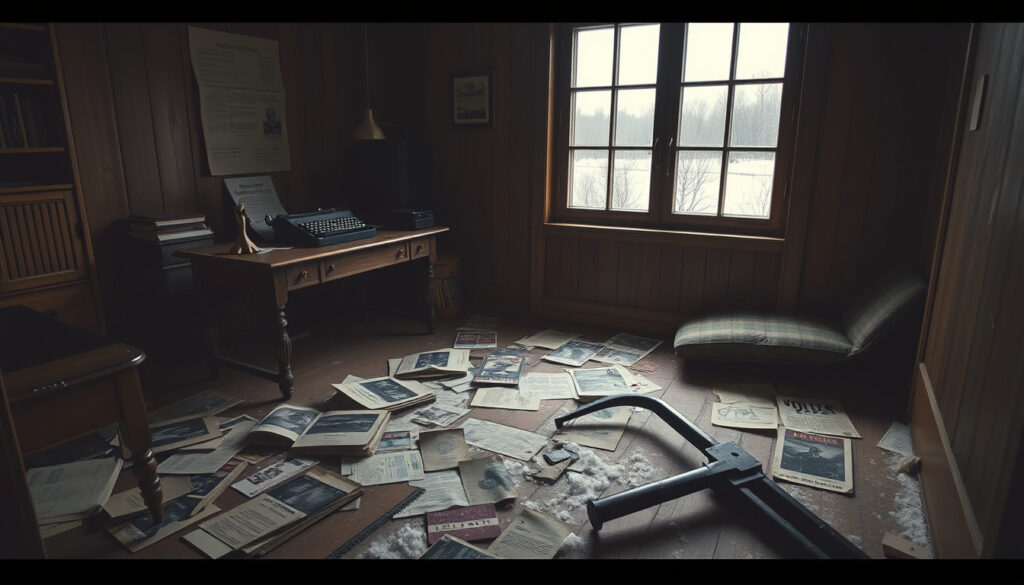
- Trotsky was struck in the skull with an ice axe while seated at his desk in his study in Coyoacán, Mexico (BBC History historic figures archive).
- He was rushed to hospital but died the next day, 21 August 1940, from severe brain injuries (Encyclopaedia Britannica history desk).
- The attack remains one of the 20th century’s most politically significant assassinations — a state-sanctioned killing carried out 11 years after the target had left the country.
What was Leon Trotsky famous for?
Co-leader of the October Revolution
- Trotsky was a decisive figure in the Bolshevik seizure of power in November 1917 (BBC History historic figures archive).
- As chairman of the Petrograd Soviet’s Military Revolutionary Committee, he organised the armed takeover of key points in the capital.
- The Bolshevik victory put Vladimir Lenin and Trotsky at the helm of the world’s first communist state.
Founder and commander of the Red Army
- Trotsky was appointed commissar of war in 1918 and built the Red Army from scattered worker militias into a disciplined fighting force (Encyclopaedia Britannica Q&A).
- He served as war commissar from 1918 to 1924, personally directing operations across multiple fronts during the Russian Civil War (Encyclopaedia Britannica Q&A).
- His armoured train became a mobile command centre, a symbol of his hands-on leadership style (Connexipedia political biography archive).
Theoretician of permanent revolution
- Trotsky developed the theory of permanent revolution, arguing that in backward countries like Russia, the working class must lead the revolution directly and spread it internationally (Wikipedia Leon Trotsky entry).
- This theory directly opposed Stalin’s doctrine of “Socialism in One Country,” which prioritised building communism within the Soviet Union first.
Founder of the Fourth International
- In 1938, while in exile, Trotsky founded the Fourth International as a global alternative to the Stalin-dominated Communist International (Connexipedia political biography archive).
- The organisation aimed to unite revolutionary socialist parties worldwide under Trotsky’s anti-Stalinist banner.
- Though small, the Fourth International inspired enduring movements in Latin America, Europe, and Asia.
Trotsky created the Red Army that won the Civil War, yet that very victory gave Stalin the institutional power to crush him. Stalin later used the army Trotsky built to hunt Trotsky’s followers.
What happened between Stalin and Trotsky?
Allies turned rivals after Lenin’s death
- Trotsky and Stalin were allies during the 1917 Revolution, with Trotsky serving under Lenin and Stalin as a senior Bolshevik figure (Encyclopaedia Britannica history desk).
- After Lenin’s death in 1924, Stalin manoeuvred to isolate Trotsky, exploiting his late arrival to the Bolshevik cause and his perceived arrogance to marginalise him from power.
Ideological differences: socialism in one country vs. permanent revolution
- Stalin championed “Socialism in One Country,” focusing on strengthening the Soviet Union internally before promoting global revolution (Encyclopaedia Britannica biography section).
- Trotsky insisted that the Soviet revolution could not survive without revolution spreading to advanced capitalist countries — his theory of permanent revolution.
- This ideological clash was also a power struggle: Stalin used the debate to paint Trotsky as reckless and unpatriotic.
Stalin’s campaign to isolate Trotsky
- Stalin orchestrated Trotsky’s expulsion from the Communist Party in 1927, then his exile to Alma-Ata (now Almaty, Kazakhstan) in 1928 (Encyclopaedia Britannica biography section).
- In 1929, Trotsky was expelled from the Soviet Union entirely, beginning a decade of wandering through Turkey, France, Norway, and finally Mexico (BBC History historic figures archive).
Trotsky’s expulsion from the Soviet Union
- Trotsky and his principal followers were exiled in January 1928 to remote parts of the Soviet Union (Encyclopaedia Britannica biography section).
- His forced departure from the USSR in 1929 severed his physical connection to the revolution he had helped create.
- From abroad, Trotsky continued to write and organise, founding the Fourth International in 1938 as a direct challenge to Stalin’s authority.
Stalin’s victory cemented Soviet stability at the cost of political pluralism. Trotsky’s exile preserved his voice but erased his influence inside the USSR, where his followers were executed by the thousands in the Great Purge.
Was Trotsky considered good or bad?
Trotsky’s supporters: a visionary revolutionary
- To many leftists, Trotsky is a martyr of anti-Stalinist communism — a principled revolutionary who resisted the descent into dictatorship (Connexipedia political biography archive).
- His critique of bureaucratic tyranny within the Soviet system resonates with democratic socialist movements today.
Critics: authoritarian and divisive
- Trotsky played a direct role in the Red Terror, the brutal repression that targeted political opponents during the Russian Civil War.
- He ordered the violent suppression of the Kronstadt rebellion in 1921, a revolt by sailors who had been Bolshevik heroes just four years earlier (Encyclopaedia Britannica Q&A).
- Critics argue that his rhetoric of international revolution justified authoritarian measures in practice.
Historical reassessment
- Historians have revisited Trotsky’s legacy since the fall of the Soviet Union, accessing archives that reveal more about his relationship with Lenin and the inner-party struggles (Wikipedia Leon Trotsky entry).
- While some rehabilitate Trotsky as a democratic alternative to Stalinism, others note that he was no liberal — he was a revolutionary who believed in dictatorship of the proletariat.
- Isaac Deutscher, Trotsky’s biographer, called him “the prophet unarmed” — a man with the right diagnosis of Stalinism but without the institutional means to stop it.
Contemporary views
- In many Latin American countries, Trotsky is celebrated as a revolutionary hero; his house in Coyoacán is a museum and pilgrimage site.
- In Russia, he remains a divisive figure: some see a traitor, others a lost alternative to Stalin’s cruelty.
- The word “Trotskyist” still carries political weight in leftist circles, describing those committed to international revolution and anti-bureaucratic struggle.
What did Joseph Stalin do to Leon Trotsky?
Political isolation and expulsion from the Communist Party
- Stalin used his position as General Secretary to stack party committees with his allies, gradually excluding Trotsky from decision-making after Lenin’s death (EBSCO Research Starters history collection).
- By 1927, Trotsky was expelled from the Communist Party, stripped of all political influence (EBSCO Research Starters history collection).
Exile and harassment
- Trotsky was forced into internal exile in Alma-Ata in 1928, then expelled from the USSR in 1929 (Encyclopaedia Britannica biography section).
- He moved from Turkey to France to Norway, each time facing political pressure to leave — often at Stalin’s diplomatic urging.
- In 1936, he settled in Mexico at the invitation of artist Diego Rivera and Frida Kahlo (BBC History historic figures archive).
Assassination plot
- Stalin ordered the NKVD to track Trotsky abroad and prepare an assassination operation (Encyclopaedia Britannica history desk).
- An initial machine-gun attack on Trotsky’s house in May 1940 failed; Stalin’s agents then activated the ice axe plan carried out by Mercader in August (Encyclopaedia Britannica biography section).
Elimination of Trotsky’s followers
- During the Great Purge of 1937–1938, Stalin’s regime executed or imprisoned thousands of real and suspected Trotskyists (Wikipedia Leon Trotsky entry).
- Trotsky’s son, Lev Sedov, died in 1938 under suspicious circumstances in Paris, believed by many historians to have been poisoned by the NKVD.
What were Trotsky’s last words?
The reported final words
- Trotsky’s last words, as recorded by his wife Natalia Sedova, are often quoted as: “I am not afraid of death” or “I am ready” (Encyclopaedia Britannica history desk).
- He made these statements in the hours after the attack, while still conscious and aware of his fatal injury.
Context of the attack
- Trotsky was reading an article about French politics when Mercader struck him from behind with the ice axe.
- He struggled with Mercader and screamed for his bodyguards, who seized the assassin but could not undo the damage to Trotsky’s brain.
- He was operated on but died 26 hours later, without regaining full consciousness after the initial operation.
Variations in accounts
- Some accounts report Trotsky saying “I am ready. I am ready” as a kind of stoic acceptance, while others frame it as “I know I am dying. I am not afraid.”
- The variation stems from different witnesses — his wife, his bodyguards, and medical staff — who recalled slightly different phrasing (Encyclopaedia Britannica biography section).
Trotsky’s death guaranteed Stalin’s unchallenged control over world communism. For the millions of leftists outside the USSR, Trotsky’s assassination transformed him from a flawed politician into a powerful symbolic martyr.
Timeline: Leon Trotsky’s life and death
The sequence of Trotsky’s life reads as a relentless march from revolutionary triumph to political extinction — each milestone bringing him closer to Stalin’s reach.
| Date | Event |
|---|---|
| Born in Yanovka, Ukraine | |
| Leads the St. Petersburg Soviet during the 1905 Revolution (Encyclopaedia Britannica) | |
| Plays key role in the October Revolution; joins Bolsheviks (BBC History) | |
| Organizes and leads the Red Army in the Russian Civil War (Encyclopaedia Britannica) | |
| Lenin dies; power struggle with Stalin begins (Encyclopaedia Britannica) | |
| Expelled from the Communist Party (EBSCO Research Starters) | |
| Forced into exile; travels to Turkey, France, Norway, Mexico (Encyclopaedia Britannica) | |
| Founds the Fourth International (Connexipedia) | |
| Attacked by Ramón Mercader in Mexico (BBC History) | |
| Dies from injuries (Encyclopaedia Britannica) |
The implication is clear: each decade of Trotsky’s life brought him closer to the ice axe, and each stage of Stalin’s consolidation made that ending more certain.
Confirmed facts
- Trotsky was assassinated by Ramón Mercader on Stalin’s orders (Encyclopaedia Britannica)
- He was a leading figure in the Russian Revolution and founder of the Red Army (Encyclopaedia Britannica)
- He was exiled from the Soviet Union in 1929 (BBC History)
- His last words were related to facing death calmly (Encyclopaedia Britannica)
What’s unclear
- Exact details of his last words vary among sources
- The precise nature of his ideological disagreements with Lenin in later years
- Whether he could have survived if medical treatment had been faster
“I am not afraid of death.”
— Leon Trotsky, as reported by his wife Natalia Sedova (Encyclopaedia Britannica biography section)
“Trotsky is a traitor.”
— Joseph Stalin, on Trotsky’s political stance (Encyclopaedia Britannica history desk)
“He was the prophet unarmed, the man who saw Stalinism coming but could not stop it.”
— Isaac Deutscher, biographer of Trotsky (Wikipedia Leon Trotsky entry)
“The Trotskyist is the ghost of the revolution that never was.”
— George Orwell, on Trotsky’s legacy (Wikipedia Leon Trotsky entry)
The pattern is stark: Trotsky’s life was a cycle of building, losing, and resisting. For historians and political activists, the question is whether he represents a lost alternative to Stalin’s terror or a cautionary tale about revolutionary zeal itself. For the millions who still look to his writings, the implication is clear: ideas can outlive the assassination that tried to kill them.
simple.wikipedia.org, biography.com, britannica.com, encyclopedia.com, historytotallynaked.com
For a deeper look into his early years and the events that shaped his ideology, see Leon Trotskys revolutionary life.
Frequently asked questions
What is Trotskyism?
Trotskyism is the Marxist theory developed by Leon Trotsky, centred on the concept of permanent revolution — the idea that the working class must lead revolution in underdeveloped countries and that revolution must spread internationally to survive. It also critiques bureaucratic collectivism as practiced under Stalin’s USSR (Connexipedia political biography archive).
Where did Leon Trotsky live in exile?
After his expulsion from the Soviet Union in 1929, Trotsky lived in Turkey (on the island of Prinkipo), France, Norway, and finally Mexico, where he settled in 1936 and remained until his assassination in 1940 (BBC History historic figures archive).
How did Trotsky’s ideas differ from Lenin’s?
Trotsky and Lenin were broadly aligned on most fundamental questions of revolution and dictatorship of the proletariat. However, Trotsky placed greater emphasis on the theory of permanent revolution and was more critical of bureaucratic centralism. In their later years, Trotsky also criticised Stalin’s rise in ways Lenin did not fully anticipate before his death (Encyclopaedia Britannica Q&A).
Who was the actual assassin of Trotsky?
Ramón Mercader, a Spanish communist and NKVD agent, carried out the assassination. He infiltrated Trotsky’s household under the alias “Frank Jacson” and struck Trotsky with an ice axe on 20 August 1940 in Coyoacán, Mexico (Encyclopaedia Britannica history desk).
What is the Fourth International?
The Fourth International was founded by Trotsky in 1938 as a global political organisation of revolutionary socialist parties opposed to the Stalin-dominated Communist International. It aimed to advance the theory and practice of permanent revolution worldwide (Connexipedia political biography archive).
Did Leon Trotsky have any children?
Yes, Trotsky had four children with his first wife Alexandra Sokolovskaya (two daughters, Zinaida and Nina) and with Natalia Sedova (two sons, Lev Sedov and Sergei Sedov). Lev Sedov died under suspicious circumstances in Paris in 1938, likely poisoned by the NKVD (Wikipedia Leon Trotsky entry).
What is the significance of Trotsky’s assassination?
The assassination eliminated Stalin’s most potent ideological rival and sent a chilling message to all opposition within the Soviet sphere. It transformed Trotsky into a martyr for anti-Stalinist communism and solidified Stalin’s control over the international communist movement for decades (Encyclopaedia Britannica history desk).
How did Stalin react to Trotsky’s death?
Stalin reportedly expressed satisfaction that the “traitor” had finally been neutralised. The assassination was kept secret from the Soviet public for a time, but Stalin privately celebrated the removal of his most persistent critic. The operation became a model for later NKVD-KGB extra-judicial killings abroad (Encyclopaedia Britannica history desk).
For anyone studying revolutionary politics or 20th-century power, Trotsky’s life forces a confrontation with a defining question: can a revolutionary survive the system he helps create? The answer — exile, erasure, and an ice axe — is as brutal as it is instructive.
More related posts
 Dodi Fayed: Relationship with Diana and Death
 Choc Chip Cookies: Mary Berry Chewy Recipe Guide
 Aziz Ansari: Accusation, Career Fallout, Comeback & Marriage
 Sam Kerr: Injury, Baby, and Leaving Chelsea
 Ca t of The Righteou Gem tone : Who’ Who & Trivia
 Mazzy Star: What Really Happened to the Band & Hope Sandoval
 Figure 8 Pools Guide: Walk Distance, Safety & Best Time to Visit
 Dr Keith Suter: Obituary, Cause of Death, Career