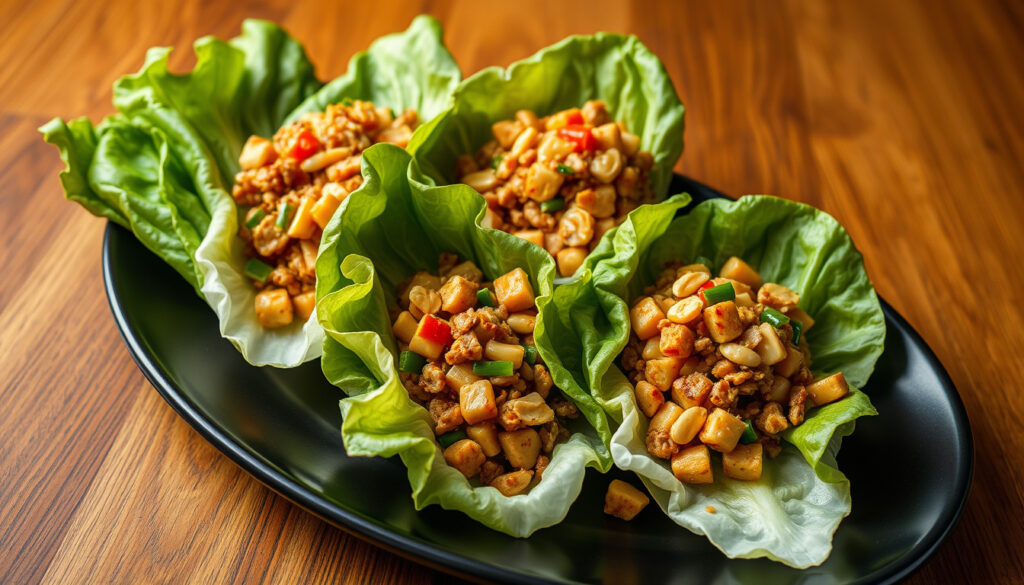
San Choy Bao: Easy Recipe for Chinese Lettuce Wraps
San Choy Bao is a Cantonese dish where seasoned pork mince gets spooned into crisp lettuce cups and eaten with your hands. The name means “lettuce treasure,” and the combination of hot, savoury filling against cool, crunchy lettuce makes this one of the more fun dishes on any menu.
Cuisine: Chinese · Main Protein: Pork mince · Key Vegetable: Lettuce cups · Alternative Names: San Choy Bow, Chinese Lettuce Wraps · Common Sauce Base: Savoury brown sauce
Quick snapshot
- Lettuce wraps with savoury mince (Dim Sim Lim)
- Originated in Cantonese cuisine (Dim Sim Lim)
- Name means “lettuce treasure” (Palatable Pastime)
- Exact timeline of when dish spread beyond Guangdong (Omnivore’s Cookbook)
- How widely pigeon was used in traditional versions (Dim Sim Lim)
- Traditional Cantonese roots (Dim Sim Lim)
- Popularized in Western Chinese restaurants post-2000 (Omnivore’s Cookbook)
- More restaurants adding plant-based versions (Dim Sim Lim)
- Health-focused adaptations continue gaining traction (Healthy Food Guide)
The following table summarises key specifications used across multiple recipes, drawing from recipe developers who publish tested amounts.
| Field | Value |
|---|---|
| Primary Dish Type | Lettuce wraps |
| Signature Protein | Pork or chicken mince |
| Prep Style | Stir-fry filling |
| Common Garnishes | Peanuts optional |
What is in San Choy Bao?
At its core, San Choy Bao is a stir-fried filling served inside fresh lettuce leaves instead of a bowl or wrapper. The magic lies in the contrast: a hot, savoury mixture of minced meat against cool, crunchy lettuce. You pick up each cup with your hands, eat the filling, and discard the lettuce. It’s interactive in a way that most restaurant dishes aren’t.
Common ingredients
The protein base is typically pork mince, though chicken, beef, turkey, or tofu work equally well. A standard pork recipe uses 250g–300g of lean mince per batch, according to Healthy Food Guide and RecipeTin Eats. Aromatics include 1–2 cloves of crushed garlic and a 3cm piece of grated fresh ginger, per Healthy Food Guide.
The sauce brings everything together. Core ingredients are reduced-salt soy sauce (2 tbsp), oyster sauce (2 tbsp), hoisin sauce (1–2 tbsp), and a splash of sesame oil, according to Healthy Food Guide. Some recipes add Shaoxing cooking wine for depth.
Vegetable components
What elevates San Choy Bao beyond ordinary mince is texture. Water chestnuts (100g–1 cup diced) provide crunch that stays intact even after stir-frying, as noted by Omnivore’s Cookbook. Bean sprouts, spring onions, shiitake mushrooms, and bamboo shoots round out the vegetables.
What does “san choy bao” mean?
The name comes from Cantonese, where “san choy” ( ) means lettuce and “bao” translates to treasure or pouch. So the dish is literally a “lettuce treasure” — a little package of flavour wrapped in something fresh and crisp. Palatable Pastime explains it as lettuce wrapped around a filling, like a small treasure chest of food.
Breakdown of the name
Spellings vary across recipes: San Choy Bao, Sang Choy Bau, and San Choy Bow all refer to the same dish, according to Palatable Pastime. The variations stem from different transliteration systems used when Cantonese terms entered English.
Bao meaning
In this context, “bao” refers to the pouch or cup shape the lettuce forms rather than the steamed bun also called bao in Mandarin. The term captures both the container and the treasure-like nature of the filling inside, per Palatable Pastime.
What nationality is San Choy Bao?
San Choy Bao traces its roots to Cantonese cuisine from the Guangdong region of China. Traditional versions reportedly used pigeon meat, though modern adaptations overwhelmingly favour pork, chicken, or beef. Dim Sim Lim confirms the Cantonese origin and notes that pork became the dominant protein in contemporary versions.
Origin and history
The dish has roots in traditional Cantonese cooking, where lettuce wraps were a way to eat meat and vegetables together without rice. According to Omnivore’s Cookbook, it became a popular appetizer in American Chinese restaurants after 2000. Australian Chinese restaurants adopted it earlier, which is why you’ll see multiple spellings and regional variations.
What makes the nationality question complicated is the dish’s evolution. The core concept — spiced meat in lettuce — is Cantonese. But the specific versions popular in Sydney, Melbourne, and American cities have been adapted for local tastes, with more water chestnuts, sweeter sauces, and lighter seasoning than traditional Guangdong versions might use.
San Choy Bao is Chinese in origin (Cantonese Guangdong), but what most people eat in Western restaurants is a localised fusion. The authentic core — seasoned mince in fresh lettuce — remains consistent regardless of where you’re eating it.
Is San Choy Bao healthy?
San Choy Bao scores well on the health front for several reasons. The lettuce acts as a low-calorie wrapper that replaces bread or rice. The filling is protein-rich and vegetable-packed. And the cooking method — quick stir-frying — preserves nutrients better than deep-frying. Healthy Food Guide lists it as low-carb, high-protein, and vegetable-packed.
Nutritional breakdown
A typical pork version with 250g–300g of lean mince provides substantial protein (25–35g per serving depending on portion size). The vegetables add fibre while the lettuce contributes minimal calories. RecipeTin Eats author Nagi Maehashi calls it “arguably the ultimate ‘just happens to be healthy’ food” because vegetables are hidden inside the savoury filling rather than presented as a side.
The health profile shifts based on protein choice. Turkey mince (400g per batch) reduces fat content further, per YouTube recipe sources. A tofu version eliminates meat fat entirely while keeping protein, as noted by Omnivore’s Cookbook.
Pros and cons
Upsides
- Low-carb alternative to rice or pasta dishes
- High protein from lean mince
- Hidden vegetables appeal to picky eaters
- Interactive eating can slow consumption
- Easy to portion-control with lettuce cups
Downsides
- Sodium can be high from soy and oyster sauce
- Some recipes use added sugar in hoisin
- Not gluten-free unless tamari replaces soy sauce
- Restaurant versions may use higher-fat cuts
The sodium content is the main trade-off: home cooks who use reduced-salt soy get a healthier result than most restaurant versions.
What does San Choy bao sauce taste like?
The sauce is where San Choy Bao delivers its flavour punch. It’s a balance of salty, sweet, and umami — the kind of savoury depth that makes you want to eat more. Caroline’s Cooking emphasises the combination of oyster sauce, Shaoxing wine, soy sauce, and sesame oil as the flavour backbone.
Sauce components
Oyster sauce provides the main umami hit. Hoisin adds sweetness and a faint peanut-like note. Soy sauce brings saltiness and colour. Sesame oil finishes with a nutty aroma. Some recipes include a small amount of rice vinegar for brightness, according to Palatable Pastime.
The ratio matters. Too much hoisin and it tastes like a satay sauce. Too little oyster sauce and the filling seems flat. Omnivore’s Cookbook suggests 2 tbsp oyster sauce to 1 tbsp hoisin as a starting point, adjusted to taste.
Flavor profile
The finished dish tastes savoury-sweet with a clean finish from the lettuce. The water chestnuts add slight natural sweetness that balances the soy. There’s warmth from ginger and often a touch of heat if fresh chilli joins the aromatics.
Home cooks who nail the 2:1 oyster-to-hoisin ratio produce a filling that tastes restaurant-quality; those who eyeball it risk losing the dish’s identity entirely.
How to make San Choy Bao
Making San Choy Bao at home is straightforward — it takes about 20 minutes total and requires one wok or large frying pan. The process follows a simple sequence: brown the protein, build the aromatics, add the sauce, mix in the vegetables, then serve in lettuce cups.
Step 1: Prepare the ingredients
Start with 250g–300g of lean pork, chicken, or beef mince. Dice water chestnuts if using canned (100g–1 cup). Slice shiitake mushrooms, chop spring onions, and separate lettuce leaves. Mix the sauce: 2 tbsp oyster sauce, 1–2 tbsp hoisin, 1 tbsp light soy sauce, 1 tsp sesame oil, and 1 tbsp Shaoxing wine combined in a small bowl.
Step 2: Brown the mince
Heat your wok over high heat until smoking. Add a splash of oil, then the mince. Spread it out in a single layer and leave it untouched for 90 seconds to develop colour. Stir-fry, breaking up clumps, until all pink is gone — about 3–4 minutes. Omnivore’s Cookbook notes that browning the pork first creates flavour foundations the vegetables can’t replace.
Step 3: Add aromatics
Push the mince to the side. Add 1–2 cloves of crushed garlic and 3cm of grated ginger to the cleared space. Stir-fry for 30 seconds until fragrant. Mix everything together.
Step 4: Add the sauce
Pour the sauce mixture over the mince. Stir to coat evenly. The sauce will bubble and thicken slightly within 1–2 minutes.
Step 5: Add vegetables
Add water chestnuts, mushrooms, bean sprouts, and any other vegetables. Toss everything together over high heat for 1–2 minutes until just softened but still crunchy. Overcooking the vegetables ruins the textural contrast that defines the dish.
Step 6: Serve
Spoon the hot filling into individual lettuce cups on a serving platter. Offer toppings at the table: sesame seeds, crushed peanuts, or fried shallots. Caroline’s Cooking suggests garnishing with spring onion and sesame seeds for freshness and crunch.
The vegetables must stay crunchy. If they turn soft and wilted, the dish loses its defining characteristic. Work fast over high heat and serve immediately — San Choy Bao does not hold well.
Summary
San Choy Bao earns its place on any menu or weeknight dinner rotation. It delivers protein, vegetables, and flavour in a format that makes eating feel fun rather than functional. For home cooks in Australia and elsewhere, the dish is forgiving: swap proteins based on preference or what’s in the fridge, adjust the sauce ratio to taste, and work fast to preserve vegetable crunch.
Parents who hide water chestnuts and bean sprouts inside a savoury mince filling get kids to eat vegetables without any negotiation — and the kids think they just found a lettuce treasure.
“San Choy Bow, or Chinese lettuce wraps, translate to bao (treasure), wrapped in saung choi, (lettuce), in this crispy fresh meaty appetizer.”
“It’s also one of those rare meals that happens to be healthy without sacrificing taste!”
Related reading: Beef Brisket Recipe · Choc Chip Cookies
For crisp San Choy Bao wraps, selecting the right lettuce matters, so explore lettuce varieties for nutrition and best uses in dishes like these.
Frequently asked questions
How do you make San Choy Bao?
Brown lean mince in a hot wok, add garlic and ginger, pour over a sauce of oyster sauce and hoisin, toss in crunchy vegetables like water chestnuts and mushrooms, then serve the hot mixture inside fresh lettuce cups.
What lettuce is best for San Choy Bao?
Iceberg lettuce is the standard choice because the leaves separate into cup-shaped portions easily and stay crisp. Baby cos (romaine) works too, though the cups will be smaller. Healthy Food Guide recommends 8 medium iceberg leaves or 12–16 baby cos leaves per batch.
Can San Choy Bao be made vegetarian?
Yes. Replace the meat with firm tofu (pressed and cubed), and the flavour profile stays satisfying because the sauce — oyster sauce, hoisin, soy — carries most of the taste. Omnivore’s Cookbook confirms this substitution works well.
Is San Choy Bao low carb?
Yes. The lettuce cups replace bread, rice, or noodles, making the dish naturally low in carbohydrates. Protein and vegetables provide the bulk of calories, not starches.
What can I substitute for pork in San Choy Bao?
Chicken mince, ground beef, turkey breast mince, or tofu all work as protein alternatives. Each changes the flavour slightly — beef adds depth, chicken is milder, turkey is leanest.
How long does San Choy Bao take to prepare?
About 20 minutes total: 5 minutes to prep ingredients, 5–8 minutes to cook the filling, and minimal assembly time. It’s a quick weeknight meal when you have the sauce ingredients on hand.
Can San Choy Bao be made ahead?
The filling keeps refrigerated for 2 days, but the lettuce cups must be prepared fresh — they wilt quickly once filled. Cook the filling, cool it rapidly, and store separately. Reheat the mince, then spoon into fresh lettuce just before serving.
More related posts
 Accommodation Coffs Harbour: Hotels, Apartments & Pet-Friendly
 What Is a Narcissist – Signs, Causes, Types Explained
 Jennifer Coolidge: Net Worth, Age, Husband, and Career
 Kath & Kim: Complete Guide to the Sitcom and US Adaptation
 Romeo and Juliet 1996: Cast Ages, Differences & Parents Guide
 Jessica Jones: Powers, Origin & Netflix Series Guide
 How to Change File Permissions in Linux (chmod Guide)
 Chuck Berry: Rock and Roll Pioneer and His Legacy