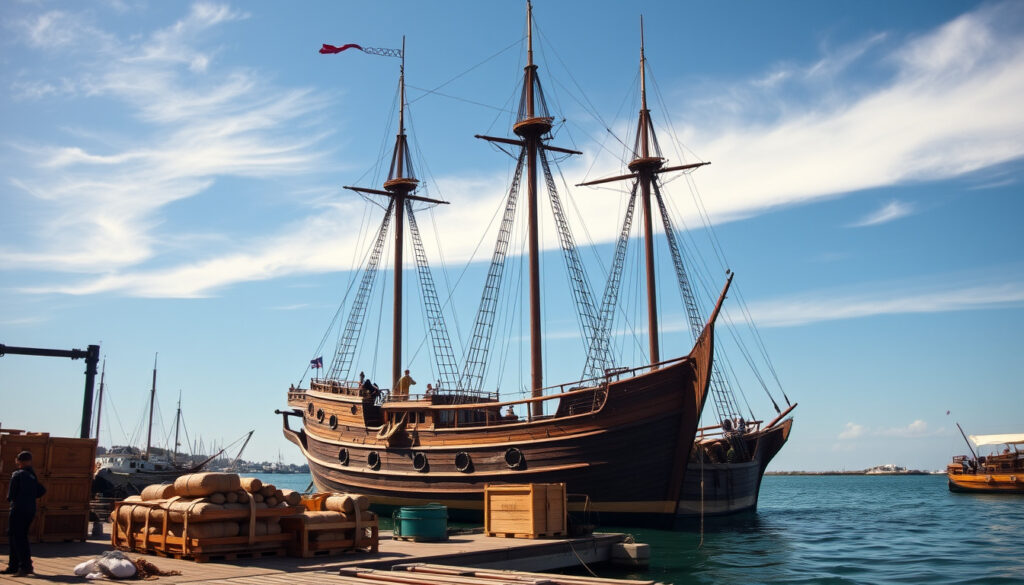
Caroline Chisholm: Biography, Achievements, and Legacy
Few names from 19th-century Australia still appear in everyday life quite like Caroline Chisholm’s. She was the humanitarian who met ships at Sydney Cove, helped bewildered new arrivals find work and shelter, and eventually became the only non-royal woman ever featured on an Australian banknote.
Born: May 1808, Northampton, England · Died: 25 March 1877, London, England · Age at marriage: 22 · Children: 8 · Portrayed on Australian $5 note: 1995–2016
Quick snapshot
- Born Caroline Jones in Northampton, England, in 1808 (National Portrait Gallery (Australia’s portrait authority))
- Married Archibald Chisholm on 30 December 1830 at age 22 (National Portrait Gallery (Australia’s portrait authority))
- Helped 11,000 immigrants find jobs or settle as farmers in New South Wales by 1846 (NSW State Library)
- Appeared on the Australian $5 note from 1995 to 2016 (Reserve Bank of Australia)
- Exact date of birth in May 1808 is not universally recorded; some sources list only the month and year.
- The precise number of people she helped varies across sources, though 11,000 is the most commonly cited figure.
- Her religious affiliation is not consistently documented in major biographical sources.
- 1808: Born in Northampton
- 1830: Married Archibald Chisholm
- 1841: Established the Female Immigrants’ Home in Sydney
- 1846: Had helped 11,000 immigrants find work
- 1877: Died in London
- 1995–2016: Appears on $5 note
- Explore her specific methods for immigrant placement and family reunification.
- Consider the broader context of female philanthropy in colonial Australia.
- Reflect on the public debate surrounding her removal from the $5 note.
Who is Caroline Chisholm and what did she do?
Caroline Chisholm (1808–1877) was an English humanitarian who devoted herself to supporting immigrant women and families in Australia. The National Portrait Gallery (Australia’s portrait authority) describes her as a humanitarian who spent almost two decades assisting new arrivals. Her work began in earnest when she noticed the lack of planning for incoming settlers — particularly young women who arrived alone and vulnerable.
By 1846, she had helped 11,000 people find jobs or settle as farmers in New South Wales, per the NSW State Library. She established the Female Immigrants’ Home in Sydney in 1841, met ships personally, and helped women find employment and accommodation. Her advocacy extended to influencing family migration policies, which encouraged the migration of families rather than individuals.
Chisholm’s approach was systematic: she met every incoming ship, offered immediate accommodation, and personally placed women in jobs. This hands-on method gave her a reputation for reliability and trust, which in turn made employers more willing to hire her applicants.
The implication: Chisholm built the first real safety net for immigrants in colonial Australia, long before any government stepped in.
How old was Caroline Chisholm when she got married?
Caroline Chisholm was 22 years old when she married Archibald Chisholm on 30 December 1830. The National Portrait Gallery confirms she was born Caroline Jones in Northampton in 1808, which places her birth and marriage in a clear timeline. Archibald was a soldier in the East India Company, and the couple spent several years in India before moving to Australia in 1838.
Her marriage was notable for the era: Archibald actively supported Caroline’s welfare work, which was unusual for a Victorian husband. While she raised a large family and managed extensive welfare work, three of her children died young — a reminder of the harsh realities of 19th-century life.
While she raised a large family and managed extensive welfare work, three of her children died young — a reminder of the harsh realities of 19th-century life.
What this means: Chisholm’s personal life was typical for the era, but her public career was extraordinary for a married woman with children.
Why was Caroline Chisholm on the $5 note?
Caroline Chisholm appeared on the Australian $5 note from 1995 to 2016 (Reserve Bank of Australia). She was the only woman (non-royal) to feature on a standard Australian banknote at that time. The note also depicted her work with immigrants, including an image of a family arriving in Australia.
When did Caroline Chisholm appear on the $5 note?
The Polymer $5 note featuring Chisholm was issued in 1995 and remained in circulation until 2016, when it was replaced with a new design. The Reserve Bank chose Chisholm alongside explorer and statesman Sir John Monash — both were recognized for their significant contributions to Australian society.
Her removal from the $5 note in 2016 sparked public debate. Critics argued it erased a rare example of a non-royal woman’s recognition on currency, while supporters of the redesign noted that new banknotes would celebrate other historical figures.
Her removal from the $5 note in 2016 sparked public debate. Critics argued it erased a rare example of a non-royal woman’s recognition on currency.
The trade-off: Commemorating Chisholm on currency gave her wide recognition, but the note’s limited circulation meant her story wasn’t as visible as a coin or stamp would have been.
How old was Caroline Chisholm when she died?
Caroline Chisholm died on 25 March 1877 in London, aged 68 (Wikipedia). She was buried in Northampton, England, near her birthplace (Find a Grave (genealogical database)). Her death came after years of declining health, and she passed away in relative obscurity — a stark contrast to the public recognition she had earned during her working years.
Although she spent decades improving Australian immigration, she died in relative obscurity in London. Her Australian legacy only fully revived with the $5 note in the 1990s.
Although she spent decades improving Australian immigration, she died in relative obscurity in London. Her Australian legacy only fully revived with the $5 note in the 1990s.
Why this matters: Chisholm’s death in England, far from the country she helped build, underscores how 19th-century female reformers were often forgotten in their lifetimes.
Who were Caroline Chisholm’s parents?
Caroline Chisholm was born Caroline Jones to William Jones and Caroline Jones (née Townsend) in Northampton, England. The National Portrait Gallery notes that she claimed her interest in welfare work began as early as age seven — an early indication of the empathy that would define her career. Her father was a farmer, and her family was of modest means but respectable standing.
Few pages address her religious affiliation directly, though sources indicate she was raised in the Church of England. Her upbringing in Northampton, a town with a strong tradition of social reform, may have influenced her later philanthropic work.
The pattern: Chisholm’s early life was shaped by modest circumstances and strong moral values, which formed the foundation of her later commitment to immigrant welfare.
What was Caroline Chisholm’s early life like?
Caroline Chisholm spent her early life in Northampton, England, in a farming family. The National Portrait Gallery notes that she claimed her interest in welfare work began as early as age seven. She received a basic education typical for girls of her class, which included reading, writing, and religious instruction.
In 1830, at age 22, she married Archibald Chisholm, an officer in the East India Company. The couple moved to Madras, India, where Caroline became involved in charitable work with women and children — experience that would later shape her methods in Australia. They had eight children, three of whom died in childhood.
In 1838, the family moved to New South Wales, Australia, where Caroline’s work with immigrants truly began. She quickly noticed the plight of young women arriving without support or guidance.
The key takeaway: Chisholm’s early exposure to hardship and her practical approach to charity were forged before she ever reached Australia.
What were Caroline Chisholm’s key achievements?
Caroline Chisholm’s most significant achievement was establishing the Female Immigrants’ Home in Sydney in 1841. She met ships personally at the harbour, provided immediate accommodation, and found work for women — often within days of arrival. She kept detailed records of placements, which built trust with employers and gave her leverage to negotiate fair wages and conditions.
Her influence extended beyond immediate welfare. She successfully lobbied the colonial government to fund family migration, arguing that a stable family unit was the building block of a strong society. She also promoted the idea of settling families on rural land, helping many immigrants move from the city to become farmers.
By 1846, she had helped over 11,000 immigrants find jobs or settlement. Her work later inspired reform in both Australia and England, where she returned in 1845 to advocate for better emigration policies and even met with Queen Victoria to present her findings.
The broader legacy: Chisholm’s achievements were not just about immediate relief — they shaped policy and public perception about who deserved support in a rapidly growing colony.
What is Caroline Chisholm’s enduring legacy?
Caroline Chisholm’s legacy is woven into Australian institutions and education. She is commemorated through schools named in her honour — including Caroline Chisholm Catholic College in Melbourne and Caroline Chisholm School in Sydney — and through historical recognition like the Australian $5 note from 1995 to 2016.
Her famous quote — “Marriage is the only way to bring a woman into a home of her own” — encapsulates her belief that character, not birth or wealth, should determine a person’s standing — a radical idea in class-conscious colonial society.
The pattern: Chisholm consistently framed her welfare work in moral terms, arguing that society’s duty to the vulnerable was not charity but justice.
Caroline Chisholm’s Other Notable Works and Influence
Beyond her direct assistance to immigrants, Chisholm was a vocal advocate for proper housing and family settlement in Australia. She established the Female Immigrants’ Home in Sydney in 1841, which served as a model for similar institutions in other colonies. Her efforts contributed to a broader awareness of the need for structured support for new arrivals.
She also influenced family migration policies, persuading officials to provide assistance to families rather than just individuals. Her work has been cited in historical analysis of immigration policy in the British Empire, and her methods were later adopted by government welfare programs in Australia.
The lasting impact: Chisholm’s model of practical charity — direct, personal, and accountable — influenced how future welfare programs were structured in Australia.
Related reading: Billy Graham: Life, Legacy, Regrets & Controversies
More related posts
 400°F to Cel iu – Oven, Fan & Air Fryer Conver ion Guide
 Australia Heatwave 40C Forecast – Extreme Warnings Across States
 Revenge of the Sith – Plot, Cast and Key Facts
 Heidi Health Login Guide: Access NHS AI Scribe
 Dyson V8 Vacuum Review: Still Worth Buying in 2026?
 Shannon Noll: What Happened to the Idol Runner-Up
 Princess Anne: Health, Relationships, and Protocol Facts
 Riley Keough: Biography, Family, Inheritance, and Health