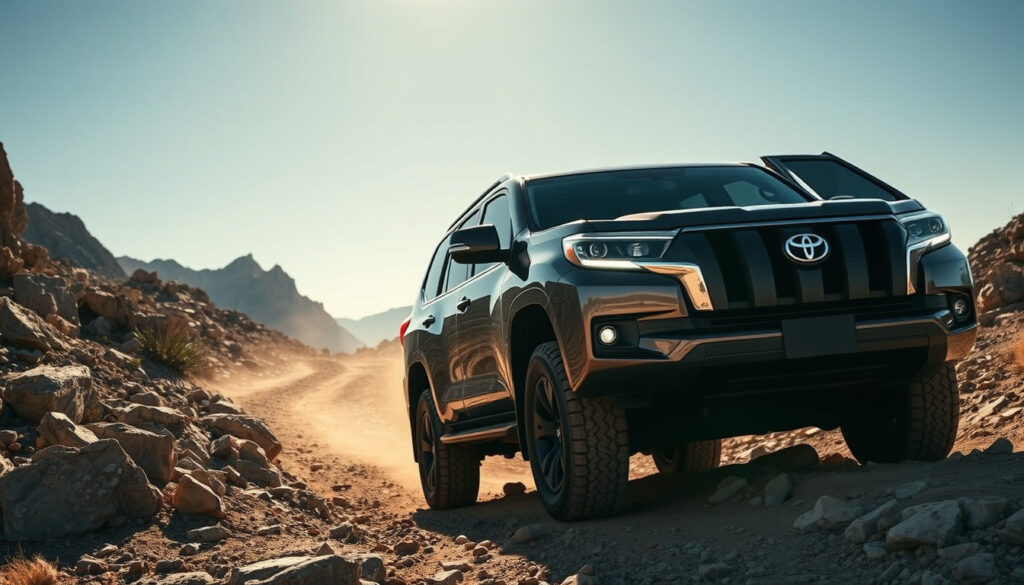
Toyota Prado 2025 – Release Date, Specs & Prices
2025 Toyota Prado Release Date and Availability
The 2025 Toyota Land Cruiser Prado represents a significant evolution of the nameplate, arriving as the 250 Series to replace the outgoing 150 Series. Australian showrooms received the new model in late 2024, with some sources designating it as a 2025 model year vehicle. The rollout extended to other right-hand-drive markets through early 2025, though availability varies considerably by region.
The Prado 250 Series has not been officially confirmed for the American market. Toyota’s North American lineup instead features the standard Land Cruiser and the rebadged Lexus GX, which serve as alternatives for buyers seeking the brand’s off-road heritage in those territories. Markets including Australia, the Middle East, and parts of Europe remain primary focus areas for this generation.
Buyers in key regions can locate the vehicle through official dealer networks, with standard five-seat configurations available across all trim levels. Supply has steadied following initial demand, though lead times may still apply depending on specific variants and locations.
2.8-litre turbo-diesel with 48V mild-hybrid
150kW and 500Nm
8-speed automatic
Full-time 4WD with locking centre differential
Key Insights
- Introduces mild-hybrid technology to the Prado line for improved efficiency and refinement
- Retains the ladder-frame chassis essential for serious off-road performance
- Built on the TNGA-F platform shared with the broader Land Cruiser family
- Five trim levels cater to different buyer requirements and budgets
- Not sold in the United States; the Lexus GX serves a similar role there
- 110-litre fuel capacity enhances long-distance touring capability
- Maximum braked towing capacity of 3,500kg maintained from the previous generation
Specifications at a Glance
| Specification | Detail |
|---|---|
| Engine | 2.8-litre turbo-diesel inline-four (1GD-FTV) |
| Displacement | 2,755cm³ |
| Power | 150kW at 3,000–3,400rpm |
| Torque | 500Nm at 1,600–2,800rpm |
| Mild-hybrid assist | 8.4kW / 65Nm |
| Fuel economy (combined) | 7.6–7.9L/100km |
| Fuel tank | 110 litres (80L + 30L) |
| Length / Width / Height | 4,990mm / 1,980mm / 1,925–1,935mm |
| Wheelbase | 2,850mm |
| Kerb weight | 2,495–2,595kg |
| Towing (braked) | 3,500kg |
| Ground clearance | 210–221mm depending on trim |
Engine, Powertrain and Performance Specs
The 2025 Prado’s motivation comes from a revised 2.8-litre turbo-diesel four-cylinder engine, internally designated 1GD-FTV. This powerplant has been enhanced with a 48-volt mild-hybrid system, marking a notable technical advancement for the nameplate. The setup incorporates a belt-driven motor generator and a 4.3Ah lithium-ion battery that capture energy during deceleration and provide electrical assistance during acceleration.
The engine itself features a chain-driven 16-valve double overhead camshaft arrangement, bore dimensions of 92mm by 103.6mm, and a compression ratio of 15.6:1. These specifications deliver outputs of 150 kilowatts between 3,000 and 3,400 revolutions per minute, along with 500 newton-metres available from just 1,600rpm through to 2,800rpm. The hybrid addition contributes an additional 8.4 kilowatts and 65 newton-metres, primarily benefiting launch feel and idle-stop smoothness. According to CarAdvice analysis of the new powertrain, the integration represents a meaningful step forward in diesel refinement for the segment.
Transmission and Drivetrain
Paired exclusively with an eight-speed automatic transmission, the Prado sends power to all four wheels through a full-time system with a 40:60 front-to-rear torque split. A dual-range transfer case enables low-range gearing for challenging terrain, while a locking centre differential allows drivers to lock power equally between the axles when traction demands it. Higher trim levels supplement this setup with a rear locking differential, adaptive suspension, and selectable off-road drive modes.
Fuel Economy and Efficiency
Official combined fuel consumption figures sit between 7.6 and 7.9 litres per 100 kilometres depending on variant, representing a meaningful improvement over the predecessor’s 8 to 9 litres per 100 kilometres. The 110-litre fuel tank, comprising an 80-litre main tank and a 30-litre sub tank, provides theoretical range exceeding 1,400 kilometres under ideal conditions. The engine meets Euro 5 emissions standards through AdBlue injection, with components prepared for potential Euro 6 compliance upgrades in future markets.
The 48-volt system primarily enhances refinement rather than enabling pure electric driving. Its contribution of 8.4kW assists with smoother engine restarts from idle-stop, reduced vibration during acceleration, and improved responsiveness during gear shifts. The system does not allow all-electric propulsion.
Performance Measurements
Unofficial testing suggests the Prado completes the 0–100 kilometres per hour sprint in approximately 10.5 seconds. Top speed ranges from 165 to 175 kilometres per hour depending on trim level and aerodynamics. The power-to-weight ratio sits at roughly 60 kilowatts per 1,000 kilograms, competitive within the segment for a vehicle of this size and purpose.
Pricing, Trims and Variants
Toyota offers the 250 Series Prado in Australia through five distinct trim levels, each positioning itself differently within the market. Pricing ranges from approximately 72,500 Australian dollars for the entry-level variant to just over 100,000 Australian dollars for the flagship model, excluding on-road costs. These figures reflect the manufacturer’s recommended retail pricing and may vary between dealers and territories. Comprehensive pricing details are available through CarsGuide’s trim-by-trim breakdown.
Trim Level Breakdown
| Trim | Starting Price (AUD) | Fuel Economy | Kerb Weight |
|---|---|---|---|
| GX | ~$72,500 | 7.6L/100km | 2,495kg |
| GXL | N/A | 7.6L/100km | 2,535kg |
| VX | N/A | 7.6L/100km | 2,570kg |
| Altitude | $93,700 | 7.9L/100km | 2,520kg |
| Kakadu | $100,575 | 7.6L/100km | 2,595kg |
Standard Equipment Across All Trims
Every Prado 250 Series variant includes 18-inch alloy wheels (with larger options on higher trims), LED lighting front and rear, a 12.3-inch touchscreen infotainment system, wireless Apple CarPlay and Android Auto smartphone integration, dual-zone automatic climate control, and autonomous emergency braking with pedestrian and cyclist detection. The touchscreen serves as the central hub for navigation, audio, and vehicle settings.
VX and Above Enhancements
Stepping to the VX grade introduces 20-inch alloy wheels, leather upholstery, a 12.3-inch digital instrument cluster, JBL premium audio, and adaptive suspension with variable damping rates. The Altitude trim differentiates itself through two-tone exterior styling and additional premium appointments. At the range top, the Kakadu adds a refrigerated centre console box, powered memory seats for both front occupants, and the most comprehensive suite of driver assistance features.
The prices listed reflect Australian market pricing before on-road costs. Pricing in other markets—including those in the Middle East, Europe, and Asia—differs substantially based on local taxes, import duties, and specification variations. Buyers outside Australia should consult their national Toyota distributors for accurate local pricing information.
Key Features, Design and Off-Road Capabilities
The 250 Series represents a thorough evolution rather than a revolution for the Prado nameplate. Exterior dimensions have grown modestly, with overall length now approaching five metres. The wheelbase extends to 2,850 millimetres, providing additional space for passengers and cargo while contributing to improved stability both on and off-road. Track widths of 1,664 millimetres front and 1,668 millimetres rear give the vehicle a planted stance. Full details on the design approach are covered in Carsales visual analysis of the exterior updates.
Off-Road Geometry and Capability
Ground clearance measures 210 millimetres on the GX and GXL variants, increasing to 221 millimetres on the VX, Altitude, and Kakadu models thanks to their elevated suspension tuning. Approach angle spans 31 to 32 degrees, while the departure angle sits at 17 degrees. The front overhang measures 935 millimetres with the rear at 1,205 millimetres. Water wading depth reaches 700 millimetres, enabling confident crossing of rivers and flooded tracks.
The full-time four-wheel-drive system maintains constant power delivery to all wheels, automatically adjusting torque distribution between axles based on surface conditions. The dual-range transfer case provides a low-range ratio for technical crawling, while the locking centre differential ensures both axles receive equal power when engaged. Higher-specification models add a rear differential lock that further improves traction on uneven or slippery surfaces. 4×4 Australia’s comprehensive off-road testing evaluated these capabilities across various challenging conditions.
Adaptive Systems and Drive Modes
Adaptive suspension, standard on upper trims, continuously adjusts damping forces based on road surface, vehicle load, and driving style. This technology enhances ride comfort during highway cruising while improving body control during aggressive cornering or rough terrain traversal. Selectable drive modes allow the driver to configure throttle response, transmission shift points, and traction control intervention for specific conditions such as mud, sand, rock, or snow.
While the 700mm wading depth figure represents the vehicle’s tested capability, owners should always assess actual water depth and flow rate before attempting crossings. Saltwater immersion requires thorough cleaning afterward to prevent corrosion. Electrical connections and air intake positions should be verified as clear of water before proceeding.
Interior and Technology
Inside, the dashboard centres on a 12.3-inch touchscreen display that controls infotainment, navigation, and vehicle settings. Wireless smartphone connectivity eliminates the need for cables for Apple CarPlay and Android Auto users. The instrument cluster adopts a digital format on higher trims, presenting driving information through configurable screens. Storage solutions include a substantial boot offering between 954 and 1,895 litres of cargo space depending on seat configuration.
How the 2025 Prado Compares to Previous Models
The transition from the 150 Series to the 250 Series brings several meaningful mechanical and technological upgrades. Perhaps most significantly, the six-speed automatic transmission has been replaced by an eight-speed unit with 25 percent faster shift times. The new gearbox features a lower first gear for improved launch performance and taller upper gears that reduce engine rpm during highway cruising, contributing to the improved fuel economy figures. Detailed comparisons between the generations are available through CarExpert’s specification comparison tool.
Powertrain Evolution
While the base engine displacement and architecture carry over from the previous generation, the addition of the 48-volt mild-hybrid system represents a substantial refinement. The hybrid component provides electrical assistance during acceleration, enables more frequent and smoother idle-stop activation, and captures energy otherwise lost during braking. The system uses AdBlue injection for emissions control, meeting Euro 5 standards with provisions for Euro 6 compliance.
Dimensions and Proportions
| Measurement | 250 Series | 150 Series |
|---|---|---|
| Wheelbase | 2,850mm | ~2,790mm |
| Fuel tank capacity | 110 litres | 87 or 150 litres |
| Combined fuel economy | 7.6L/100km | ~8–9L/100km |
Technology and Refinement
The interior technology receives a comprehensive update with larger touchscreen displays, fully digital instrument clusters on higher trims, improved smartphone integration, and expanded driver assistance features. Despite the additional technology and larger dimensions, kerb weights have been managed to remain comparable to or lighter than the previous generation in some configurations, thanks to smarter material usage and optimised engineering.
The ladder-frame chassis structure has been retained, preserving the rigid-axle suspension heritage essential for serious off-road performance. This approach differentiates the Prado from some competitors that have adopted unibody construction for improved on-road refinement at the expense of off-road capability. Towing capacity remains at 3,500 kilograms braked, ensuring the Prado continues to serve owners requiring genuine load-carrying functionality.
2025 Toyota Prado Development and Launch Timeline
Understanding when the 2025 Toyota Prado became available requires examining both official announcements and market-specific rollouts, as different regions received the vehicle according to their own schedules.
- 2023: Test mules and prototypes of the 250 Series begin appearing during development testing in various markets
- Mid-2024: Toyota officially unveils the new generation to media and announces Australian market specifications
- Late 2024: Australian dealerships begin receiving stock; first customer deliveries commence
- Early 2025: Broader international rollout continues to additional right-hand-drive markets
These dates reflect observed patterns across multiple market launches, though Toyota has not published a unified global release schedule. The staggered approach aligns with production capacity and regional homologation requirements that vary by country.
What We Know and What Remains Unclear
For prospective buyers and enthusiasts, distinguishing confirmed facts from uncertainties helps set realistic expectations about the 2025 Prado.
Confirmed Information
- 2.8-litre turbo-diesel engine with 48-volt mild-hybrid assistance
- Eight-speed automatic transmission across all variants
- Full-time four-wheel drive with locking centre differential
- Five trim levels offered in the Australian market
- Maximum 3,500kg braked towing capacity
- Built on TNGA-F platform with ladder-frame construction
- Not officially sold in the United States market
Information Requiring Verification
- Exact specifications for markets outside Australia
- Future powertrain options including potential petrol or stronger hybrid variants
- Pricing evolution over the model year
- Availability timeline for additional colour and option packages
- Whether certain features will expand to lower trim levels
- Long-term reliability data as vehicles accumulate kilometres
Market Position and Significance
The 2025 Prado enters a competitive landscape featuring established rivals such as the Land Rover Defender, Nissan Patrol, and Isuzu mu-X. Toyota’s approach emphasises proven reliability, extensive dealer networks, and the accumulated reputation of the Land Cruiser nameplate. The addition of mild-hybrid technology addresses growing demands for improved efficiency without compromising the practical capabilities that define the vehicle’s character. Competitive analysis from WhichCar’s segment comparison provides additional context on how the Prado stacks up against alternatives.
For Australian buyers in particular, the Prado fills a niche between the standard Land Cruiser 70 Series workhorse and more road-focused luxury SUVs. Its combination of genuine off-road ability, reasonable fuel consumption, and everyday usability positions it as a versatile choice for regional and rural customers, weekend adventurers, and families requiring seven-seat practicality. Those seeking to understand broader fuel cost considerations may find the Fuel Watch WA – Guide to Cheapest Petrol Prices a useful companion resource.
Sources and Expert Perspectives
Information synthesised for this overview draws from multiple independent automotive publications that conducted detailed reviews and specification analyses of the Australian-market Prado 250 Series. These sources include CarSauce, CarExpert, 4×4 Australia, CarsGuide, and Prado250Series.com, all of which published comprehensive technical specifications, pricing details, and driving impressions following the vehicle’s launch.
“The new Prado combines heritage with hybrid innovation.”
— Toyota representative statement, summarised from multiple Australian market communications
Independent reviewers consistently noted the refined powertrain delivery, improved interior quality, and capable off-road performance. Fuel economy figures received particular praise, with testers confirming real-world consumption close to official claims during mixed driving conditions. The eight-speed transmission was highlighted for its smooth operation and appropriate shift calibration for both on-road comfort and low-range crawling. For those comparing automotive technology options, a related review of Galaxy Buds FE – In-Depth Budget ANC Review offers insights into consumer electronics evaluation approaches that parallel automotive scrutiny.
2025 Toyota Prado: Final Thoughts
The 2025 Toyota Land Cruiser Prado 250 Series successfully evolves a proven formula through thoughtful powertrain enhancements, updated technology, and refined packaging. Its 48-volt mild-hybrid system adds meaningful refinement without sacrificing the genuine off-road capability that defines the nameplate. With five distinct trim levels, comprehensive standard features, and maintained towing capacity, the Prado continues to offer something for both practical buyers and enthusiastic adventurers. While American market availability remains absent, the vehicle’s strengths in Australia and other key regions confirm Toyota’s commitment to serving markets where the Prado’s combination of capability, reliability, and efficiency holds enduring appeal.
Frequently Asked Questions
What is the release date for the 2025 Toyota Prado?
The 2025 Prado launched in Australian showrooms during late 2024, with some vehicles designated as 2025 model year. Broader international rollout to additional markets continued through early 2025.
What engine powers the 2025 Toyota Prado?
The 250 Series uses a 2.8-litre turbo-diesel four-cylinder engine producing 150 kilowatts and 500 newton-metres, supplemented by a 48-volt mild-hybrid system adding 8.4 kilowatts and 65 newton-metres.
Is the 2025 Toyota Prado a hybrid?
Yes, the Prado 250 Series includes a 48-volt mild-hybrid system that provides electrical assistance during acceleration, enables smoother idle-stop operation, and captures regenerative energy. However, this is not a full hybrid or plug-in hybrid; the vehicle cannot operate on electric power alone.
What is the fuel economy of the 2025 Toyota Prado?
Official combined fuel consumption ranges from 7.6 to 7.9 litres per 100 kilometres depending on trim level. The 110-litre fuel tank provides substantial range potential for long-distance travel.
What is the price range for the 2025 Toyota Prado?
In the Australian market, pricing starts at approximately 72,500 Australian dollars for the GX variant and reaches around 100,575 Australian dollars for the Kakadu flagship. Prices exclude on-road costs and vary by market.
Is the 2025 Prado available in the United States?
The Prado 250 Series is not officially sold in the American market. Toyota offers the standard Land Cruiser and the Lexus GX as alternatives, both sharing the brand’s off-road heritage but targeting different market segments.
What are the off-road capabilities of the 2025 Toyota Prado?
The Prado offers up to 221 millimetres of ground clearance, approach angles of 31–32 degrees, departure angle of 17 degrees, and 700 millimetre wading depth. Full-time four-wheel drive with a locking centre differential and low-range gearing support serious off-road use.
How does the 2025 Prado differ from the previous 150 Series?
Key differences include the eight-speed automatic transmission replacing the six-speed unit, addition of 48-volt mild-hybrid technology, longer wheelbase, improved fuel economy, updated interior technology with larger screens, and revised exterior styling while retaining the ladder-frame chassis.
More related posts
 Tristan Schoolkate: Bio, Ranking & Career Stats
 3000 Yen to AUD: Live Rate Converter & Japan Budget Guide
 Accommodation Coffs Harbour: Hotels, Apartments & Pet-Friendly
 Illawarra Credit Union – Branches, Services & 2025 Merger
 Bret Michaels: Relationship, Health, Net Worth & More
 Weighted Blanket Benefits, Risks, and Safety Guide
 Alysa Liu: Ethnicity, ADHD, Language & Olympic Gold
 Adria Arjona: Biography, Movies, and Personal Life