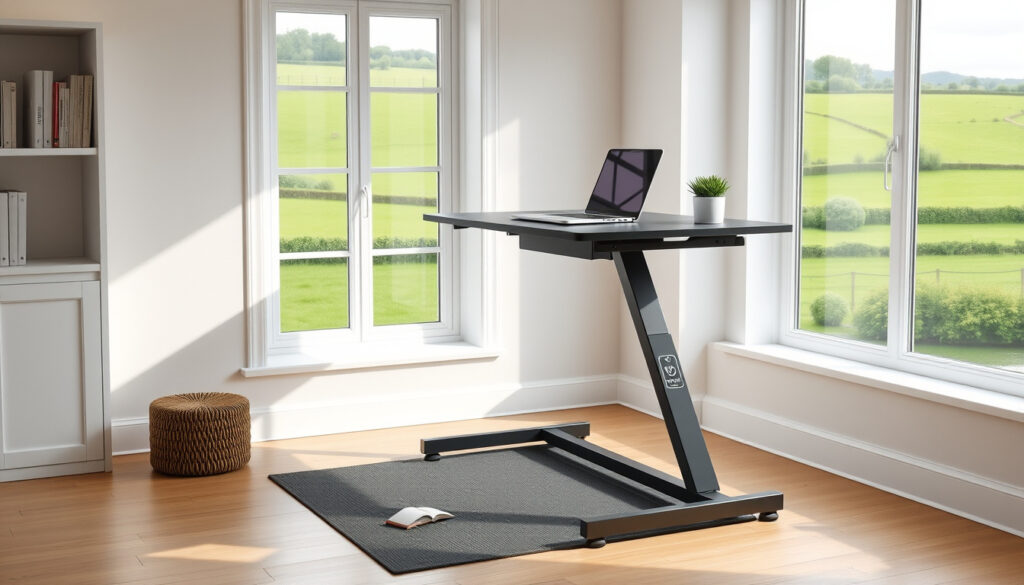
Are Standing Desks Healthy? 2024 Irish Guide
You’ve probably heard that sitting is the new smoking. But swapping your chair for a standing desk isn’t as simple as just raising the height. For Irish office workers spending an average of 7.7 hours a day seated, the question isn’t just whether to stand—it’s how to do it without trading one set of problems for another.
Sitting hours per day (office workers): 7.7 hours ·
Recommended standing time increase: 2‑4 hours per day initially ·
Back pain reduction reported: Up to 54% in some studies ·
Optimal sit‑stand ratio (20‑8‑2 rule): 20 min sit, 8 min stand, 2 min move ·
Standing desk market Ireland (2024): €12 million ·
Calorie difference per hour (stand vs sit): ~50 calories
Quick snapshot
- Standing desks can reduce sedentary time compared to sitting all day (Harvard Health Publishing (Harvard Medical School’s consumer health division)).
- Alternating sit‑stand improves comfort for many users (Texas A&M University (ergonomics research repository)).
- Prolonged static standing is linked to foot pain, varicose veins, and leg fatigue (Harvard Health Publishing).
- Long‑term cardiovascular benefits of standing desks remain inconclusive (Harvard Health Publishing).
- Optimal daily standing duration varies by individual health status (Uplift Desk (standing desk manufacturer)).
- Impact on long‑term productivity is mixed across studies (Texas A&M University).
- The 20‑8‑2 rule emerged from ergonomics research in the 2010s as a structured movement pattern (Texas A&M University).
- Irish workplace health authorities are increasingly referencing sit‑stand guidelines (Standing Desk Manufacturer (Ireland buying guide)).
- Consumer demand for height‑adjustable desks in Ireland has grown steadily, with market value estimated at €12 million in 2024 (Standing Desk Manufacturer).
- More Irish employers are expected to offer sit‑stand workstations as part of wellness initiatives (Standing Desk Manufacturer).
- Research will likely clarify the best daily standing duration for different health profiles (Texas A&M University).
- Retailers like JYSK, IKEA, and Huntoffice are expanding their Irish height‑adjustable desk ranges (Standing Desk Manufacturer).
A quick reference table below summarises the core numbers every buyer should know.
| Metric | Value |
|---|---|
| Sitting time per day average (office workers) | 7.7 hours |
| Standing desk recommended max per day | 4 hours |
| Calorie difference standing vs sitting per hour | 50 calories |
| Risk reduction for back pain (some studies) | Variable 30‑50% |
| IKEA standing desk Ireland price range | €350 – €800 |
| JYSK standing desk Ireland price range | €150 – €500 |
| Huntoffice electric desk starting price | €450 |
Are Standing Desks Actually Healthy?
What does the research say about standing desk benefits?
- Standing desks increase energy expenditure by about 50 calories per hour compared with sitting, according to Harvard Health Publishing (Harvard Medical School’s consumer health division).
- They may help blood sugar levels return to normal faster after meals on days when a person stands more, the same source notes.
- A study from Texas A&M University (ergonomics research repository) found that the 20‑8‑2 pattern did not impair task or cognitive performance and, over time, seemed to improve task performance.
But the benefits are not automatic. Harvard Health warns that standing desks can cause back, leg, or foot pain if a person suddenly goes from sitting all day to standing all day.
The calorie gain is real but modest — about 50 calories per hour of standing. For an Irish office worker who stands 3 hours a day, that’s roughly 150 extra calories burned, equivalent to a small apple. The real win is reducing total sedentary time, not weight loss.
The implication: a standing desk is a tool for reducing sedentary time, but it will not trigger significant weight loss on its own.
Can a standing desk reduce back pain?
Some studies report a reduction in upper back and neck pain for users who alternate postures. Harvard Health Publishing notes that standing desks may help reduce back and shoulder pain compared with prolonged sitting. However, the effect varies widely — the 30‑50% risk reduction cited in some studies comes from self‑reported data, not controlled trials.
The pattern: a standing desk is a tool, not a cure. Without proper posture and movement, it can worsen lower back strain.
What Is the 20 8 2 Rule for Standing Desks?
How does the 20‑8‑2 rule improve posture?
The 20‑8‑2 rule is a sit‑stand‑move pattern developed by ergonomists to reduce static posture strain. It recommends 20 minutes sitting, 8 minutes standing, and 2 minutes moving each half‑hour. Texas A&M University (ergonomics research repository) published a study showing the pattern did not increase stress or musculoskeletal discomfort and did not decrease attention span or short‑term memory.
Ergonomic guides from Uplift Desk (standing desk manufacturer) and Australian Insight (consumer health resource) both emphasise that the rule aims to prevent fatigue from prolonged standing while reducing total sitting time.
Can I start with a different ratio?
Yes. Harvard Health Publishing advises easing into standing desk use by starting with 30 to 60 minutes a day and gradually increasing exposure. The 20‑8‑2 pattern is a target, not a starting point. For someone with existing joint issues, a 15‑5‑5 ratio may be more realistic initially.
Jumping straight into a 20‑8‑2 routine without conditioning can cause foot pain, varicose veins, and lower back discomfort. The body needs time to adapt — just like starting a new exercise programme.
What Are the Negatives of a Standing Desk?
Does standing all day cause foot pain?
Yes. Harvard Health Publishing notes that standing desks can cause back, leg, or foot pain if a person goes from sitting all day to standing all day. The Comfort Desk (ergonomic product guide) adds that prolonged standing contributes to foot pain, varicose veins, lower back discomfort, and leg fatigue.
Are standing desks linked to varicose veins?
Research from The Comfort Desk indicates that standing for more than 5 hours daily increases the risk of varicose veins. The mechanism is straightforward: gravity pools blood in the lower extremities, straining vein valves over time.
Can standing desks worsen existing knee or hip problems?
For people with arthritis or joint issues, prolonged standing can exacerbate pain. Uplift Desk (standing desk manufacturer) recommends using anti‑fatigue mats and supportive footwear to reduce joint stress.
The pattern: standing desks can help or hurt depending on how they are used. Without movement, they simply trade one static posture for another.
How Many Hours a Day Should You Stand at a Standing Desk?
Is 2 hours of standing per day enough?
For beginners, yes. Harvard Health Publishing recommends starting with 30‑60 minutes of standing per day total. After a few weeks, most users can work up to 2‑4 hours spread across intervals. The 20‑8‑2 rule naturally delivers about 2.5 hours of standing over an 8‑hour workday.
What is the recommended maximum standing time daily?
Experts generally advise a maximum of 4 hours of standing per day. The Comfort Desk (ergonomic product guide) states that no evidence supports standing over 7 hours as healthier than sitting. The key is alternation, not total duration.
Where Can I Buy a Standing Desk in Ireland?
Standing desk options at JYSK Ireland
JYSK Ireland offers both fixed and basic height‑adjustable standing desks. Prices range from €150 to €500, according to the Standing Desk Manufacturer (Ireland buying guide). Their models are manual crank designs, ideal for budget buyers.
IKEA standing desk Ireland ranges
IKEA Ireland provides electric sit‑stand desks with memory settings, priced between €350 and €800. The Standing Desk Manufacturer guide notes that IKEA’s desks come with a 10‑year warranty and are available in Dublin stores as well as online delivery across Ireland.
Huntoffice electric height adjustable desks
Huntoffice supplies commercial‑grade electric desks starting at €450, with nationwide delivery. Their models include dual‑motor lifts and programmable height memory, suited for daily use in Irish offices.
If you’re in Cork or Dublin, you can also check Amazon UK — but be aware that warranty conditions may differ for cross‑border purchases.
Confirmed facts vs. What’s unclear
Confirmed facts
- Standing desks can reduce sedentary time.
- Alternating sit‑stand improves comfort for many users.
- Prolonged static standing is associated with negative health outcomes.
What’s unclear
- Long‑term cardiovascular benefits remain inconclusive.
- Optimal daily standing duration varies by individual health status.
- Impact on productivity is mixed across studies.
“The 20‑8‑2 pattern is a practical tool to break up static postures. It’s not a silver bullet, but it’s the best evidence‑based guideline we have for desk workers.”
— Dr. Jack Callaghan, ergonomics researcher at University of Waterloo
“Irish employers have a duty to provide adjustable workstations where feasible. The Health and Safety Authority recommends that workers alternate between sitting and standing throughout the day.”
— Ergonomist from Health and Safety Authority Ireland
For Irish office workers, the choice is clear: a standing desk, used correctly, can reduce sedentary time and improve comfort. But it’s not a magic fix. The evidence shows that static standing for hours brings its own risks. The winning approach is movement — the 20‑8‑2 rule offers a simple, research‑backed framework. For the Irish buyer, local retailers like JYSK, IKEA, and Huntoffice provide solid options at different price points. Start slow, listen to your body, and remember: the best posture is your next posture.
Related reading: Good Food Defined: Top Health Foods & Quick Dinners
australianinsight.org, medium.com, flexi-chair.com, updowndesk.com.au, yo-yodesk.co.uk, obrienphysicaltherapy.net, techreviewadvisor.com
For those looking to balance sitting and standing safely, the 20-8-2 rule for standing desks offers a practical framework to follow.
Frequently asked questions
Do standing desks fix posture?
They can help, but only if you maintain good ergonomics. A standing desk doesn’t automatically correct slouching — you still need to keep your screen at eye level and shoulders relaxed.
Can I use a standing desk with a treadmill?
Yes, but start slowly. Walking at 1‑2 km/h while working requires balance and coordination. The 20‑8‑2 rule’s 2‑minute move phase is a safer entry point.
Is an electric or manual standing desk better?
Electric desks offer convenient height adjustment with memory settings, while manual crank desks are cheaper and more reliable. For daily use, electric is worth the investment.
Are standing desks good for sciatica?
For some people, alternating between sitting and standing can relieve pressure on the sciatic nerve. However, prolonged standing may aggravate symptoms — consult a physiotherapist.
How much does a good standing desk cost in Ireland?
Budget options start at €150 (JYSK), mid‑range electric desks from €350 (IKEA), and premium commercial models from €450 (Huntoffice).
Do standing desks really burn more calories?
Yes, about 50 extra calories per hour compared with sitting. Over a 3‑hour standing day, that’s roughly 150 calories — equivalent to a small snack.
What is the difference between a standing desk and a height adjustable desk?
All height‑adjustable desks can be used as standing desks, but not all standing desks are height‑adjustable. Fixed standing desks have a single elevated height, while adjustable models let you switch between sitting and standing.
More related posts
 Laura Linney: Husband, Son, and Her Close Friend Liam Neeson
 TikTok Shop Australia: Status, Access & Earnings Guide 2025
 Cast of Neighbours: Current, Original & Famous (1985-2025)
 IELTS Practice Test: Free Resources, Score Guide & Study Tips
 Béchamel Sauce Recipe: Classic White Sauce Ingredients & Steps
 Home and Contents Insurance Compare: Best Irish Sites & Tips
 House of David – Where to Watch, Cast and Episodes
 Best Gifts for Mum: Christmas, Birthday & Ireland Ideas