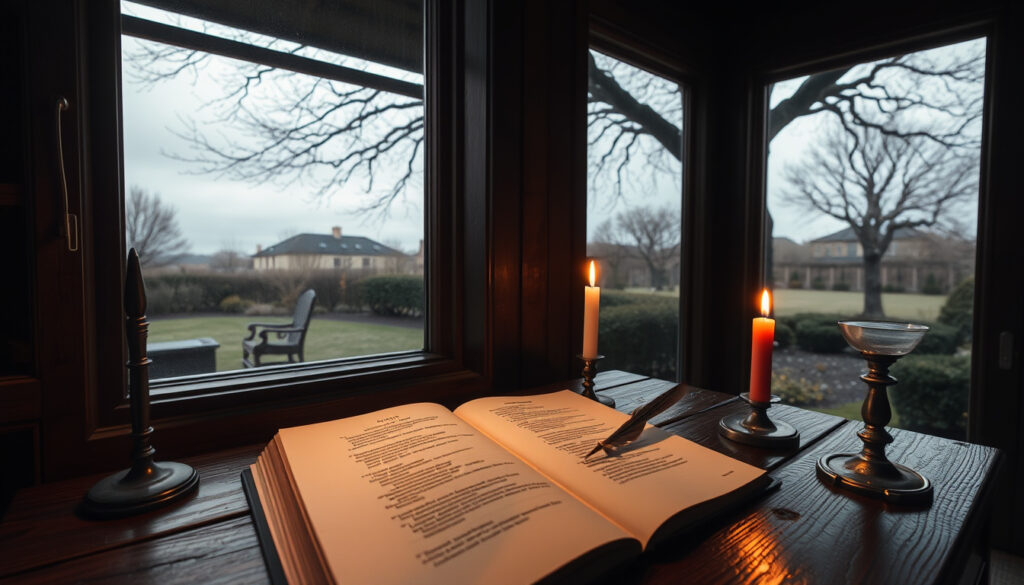
Emily Dickinson: Biography, Famous Poems, Death, and Legacy
Emily Dickinson spent most of her life inside her family’s home in Amherst, Massachusetts, but her mind ranged across death, nature, love, and eternity. She left behind over 1,800 poems, according to the Poetry Foundation (literary archive and publisher), yet only a handful made it into print while she was alive. This guide looks at the woman behind the myth: her famous lines, her closest relationships, and the health problems that kept her indoors.
Born: December 10, 1830, Amherst, Massachusetts ·
Died: May 15, 1886, Amherst, Massachusetts ·
Poems published in lifetime: fewer than 12 ·
Poems discovered after death: over 1,800 ·
Notable relationship: Susan Gilbert (suspected romantic correspondence)
Quick snapshot
- Wrote over 1,800 poems (Poetry Foundation)
- Lived most of adult life in Amherst family home (Academy of American Poets)
- First collection published 1890, four years after death (Poetry Foundation) (Poetry Foundation)
- Exact nature of her relationship with Susan Gilbert
- Cause of her severe eye pain and headaches
- Timeline and extent of her reclusiveness
- 1830: Born in Amherst, Massachusetts (National Endowment for the Arts)
- 1847–48: Attended Mount Holyoke Female Seminary for one year (National Endowment for the Arts)
- 1858–1865: Most prolific writing period (National Endowment for the Arts)
- 1886: Died in Amherst (National Endowment for the Arts)
- Ongoing scholarly debate about her sexuality and health
- New restored editions of her poems continue to appear
- Popular culture keeps rediscovering her work and life
Eight key facts, one pattern: Dickinson’s life was outwardly quiet but internally explosive.
| Label | Value |
|---|---|
| Full Name | Emily Elizabeth Dickinson |
| Birth | December 10, 1830, Amherst, Massachusetts (Academy of American Poets) |
| Death | May 15, 1886, Amherst, Massachusetts (Academy of American Poets) |
| Occupation | Poet |
| Education | Mount Holyoke Female Seminary (one year) (Academy of American Poets) |
| Notable Works | “Because I could not stop for Death”, “I’m Nobody! Who are you?”, “Hope is the thing with feathers” |
| Poems Written | Over 1,800 (Poetry Foundation) |
| First Published Collection | 1890 (posthumous) (Poetry Foundation) |
What was Emily Dickinson most famous for?
Her posthumous recognition as an original poet
- Dickinson is widely considered one of the leading 19th-century American poets (Duquesne University Libraries).
- Her work was almost entirely unpublished and unknown during her lifetime (Academy of American Poets).
- The first collection of her poems appeared in 1890, four years after her death (Poetry Foundation).
Themes in her poetry: death, immortality, nature, love
- Death is a central theme—she wrote over 100 poems on the subject.
- Immortality appears as a companion to death; nature and love are equally prominent (National Endowment for the Arts).
- Her poetry is known for bold original verse, epigrammatic compression, and unconventional punctuation (Duquesne University Libraries).
Her legacy in American literature
- Dickinson is now classified among America’s most original and influential poets (Duquesne University Libraries).
- Her influence extends to modern poets and songwriters, including figures like Taylor Swift.
How is Taylor Swift related to Emily Dickinson?
Genealogical research has suggested that singer Taylor Swift is a distant cousin of Dickinson, though the connection is not universally verified. Swift has referred to Dickinson in her work and acknowledged the potential family tie.
The implication: Dickinson’s obscurity in life was directly proportional to her explosive posthumous fame—a pattern that forces readers to reconsider how fame and quality interact.
What was Emily Dickinson’s most famous line?
Analysis of “Because I could not stop for Death”
“Because I could not stop for Death – He kindly stopped for me –”
- This opening from poem #479 is among her most quoted lines (Poetry Foundation).
- The poem personifies death as a gentle carriage driver, a theme that captivated readers.
Other iconic opening lines
“I’m Nobody! Who are you? Are you – Nobody – too?”
- This playful rejection of public identity is another Dickinson hallmark.
- “I dwell in Possibility – A fairer House than Prose –” showcases her compression-style (Poetry Foundation).
The popularity of “I’m Nobody! Who are you?”
- This poem resonates with modern audiences for its celebration of privacy.
- It is frequently anthologized and taught in schools.
The catch: Dickinson’s most famous lines often express the very solitude she lived—making the poetry feel like a direct message from behind that closed door.
A poet who avoided fame wrote some of the most famous lines in American English. The paradox is the point: Dickinson’s private voice became the public’s treasure.
Did Emily Dickinson have a female lover?
The role of Susan Gilbert in Dickinson’s life
- Susan Gilbert, Dickinson’s sister-in-law (married to brother Austin), received more than 300 letters from Dickinson (Poetry Foundation).
- Many of these letters express intense emotional and physical longing.
Interpretation of the letters
- Some scholars argue that Dickinson’s letters to Susan constitute a record of romantic love.
- Others caution against projecting modern labels of “lesbian” or “bisexual” onto 19th-century same-sex friendships.
Scholarly debate on Dickinson’s sexuality
- The debate is ongoing and inconclusive.
- Dickinson also wrote passionate poetic letters to a person she called “Master” (National Endowment for the Arts).
What this means: readers have to sit with ambiguity. The evidence for a romantic relationship with Susan is substantial but not definitive—a rare and honest scholarly standoff.
What illness did Emily Dickinson suffer from?
Possible diagnoses: Bright’s disease, severe headaches, mental health
- She was diagnosed with Bright’s disease (nephritis) shortly before her death (National Endowment for the Arts).
- In her early thirties, she underwent treatment for a painful eye condition, now thought to have been iritis or severe light sensitivity (National Endowment for the Arts).
- Some biographers suggest she may have suffered from agoraphobia or depression, though modern diagnoses remain speculative.
Eyewitness accounts of her symptoms
- Thomas Wentworth Higginson described her voice as “a step like a pattering child’s in the entry” and noted her frailty (National Endowment for the Arts).
- She avoided many social interactions, especially after her 30s.
Impact of illness on her reclusiveness
- Her eye treatments required two extended stays in Boston (1864 and 1865) (National Endowment for the Arts).
- Her health remained poor until her death at age 55.
The trade-off: it’s possible that Dickinson’s physical limitations intensified her writing. Less time for society meant more time for poems.
The woman who could barely leave her house left a body of work that has traveled the world. Her illness may have been the crucible for her art.
Timeline: Emily Dickinson’s life in key events
- 1830 – Born December 10 in Amherst, Massachusetts (Academy of American Poets)
- 1847–1848 – Attended Mount Holyoke Female Seminary (Academy of American Poets)
- 1858 – Began compiling poems into hand-sewn fascicles (Poetry Foundation)
- 1862 – Sent poems to Thomas Wentworth Higginson, beginning a lifelong correspondence (National Endowment for the Arts)
- 1864–1865 – Spent months in Boston for eye treatment (National Endowment for the Arts)
- 1870s – Lived increasingly reclusive; rarely left her home
- 1886 – Died May 15; first collection published posthumously in 1890 (Poetry Foundation)
The pattern: Throughout her life, Dickinson’s health and reclusiveness shaped her poetic output.
What we know and what remains unclear
Confirmed facts
- Dickinson wrote over 1,800 poems (Poetry Foundation)
- She lived most of her adult life in her family home in Amherst (Academy of American Poets)
- Her first collection was published four years after her death (Poetry Foundation)
- She had treatment for eye pain in her early 30s (National Endowment for the Arts)
What’s unclear
- The exact romantic nature of her relationship with Susan Gilbert
- The precise cause of her eye and headache symptoms
- Whether she suffered from agoraphobia or depression
- The full timeline and extent of her reclusiveness
The pattern: Confirmed facts and unresolved questions both define our understanding of Dickinson.
In her own words: selected quotations
“If I feel physically as if the top of my head were taken off, I know that is poetry.”
— Emily Dickinson, in a letter to Thomas Higginson (Poetry Foundation)
“Because I could not stop for Death – He kindly stopped for me –”
— Emily Dickinson, poem #479 (Poetry Foundation)
“A step like a pattering child’s in the entry.”
— Thomas Wentworth Higginson, describing his first meeting with Dickinson (National Endowment for the Arts)
The three quotations capture Dickinson’s physical definition of poetry, her embrace of death, and the almost childlike presence others perceived in her.
Related reading: The Caine Mutiny: Novel, Film, True Story & Famous Quotes
For a deeper look into Emily Dickinsons reclusive life and poetry, this article explores the quiet power of her nearly 1,800 poems.
Frequently asked questions
How many poems did Emily Dickinson write?
She wrote over 1,800 poems, of which fewer than a dozen were published during her lifetime (Poetry Foundation).
Was Emily Dickinson married?
No. She never married, but she had deep emotional relationships, particularly with Susan Gilbert and possibly others.
What is the theme of Emily Dickinson’s poetry?
Her poetry covers death, immortality, nature, love, and the inner life, often with compressed and original language (Duquesne University Libraries).
Where did Emily Dickinson live?
She spent almost her entire life in her family home on Main Street in Amherst, Massachusetts (Academy of American Poets).
When did Emily Dickinson die?
She died on May 15, 1886, in Amherst, Massachusetts (Academy of American Poets).
What is Emily Dickinson’s most famous poem?
“Because I could not stop for Death” is widely considered her most famous poem (Poetry Foundation).
Is Emily Dickinson considered a feminist?
Many modern scholars read her work as a challenge to 19th-century gender norms, but she did not identify as a feminist in her time.
What caused Emily Dickinson’s death?
She was diagnosed with Bright’s disease (nephritis) shortly before her death; her health had been in decline for years (National Endowment for the Arts).
To this day, Emily Dickinson remains a figure of fascination precisely because she left more questions than answers. Her poems offer an intimate but incomplete record of a life lived intensely within four walls. Dickinson’s legacy remains a puzzle, inviting readers to confront the mystery through her poems.
More related posts
 Mount Buffalo National Park: A Complete Guide
 Sam Kerr: Injury, Baby, and Leaving Chelsea
 Isaac Quaynor: Heritage, Family, Relationship & Career Stats
 Micro SD Card Guide: Switch, Phones, Cameras
 Weighted Blanket Benefits, Risks, and Safety Guide
 Bret Michaels: Relationship, Health, Net Worth & More
 Jared Padalecki: Health, Height, Marriage, and Supernatural Career
 Tralalero Tralala Meaning – Italian Folk Roots to TikTok Fame