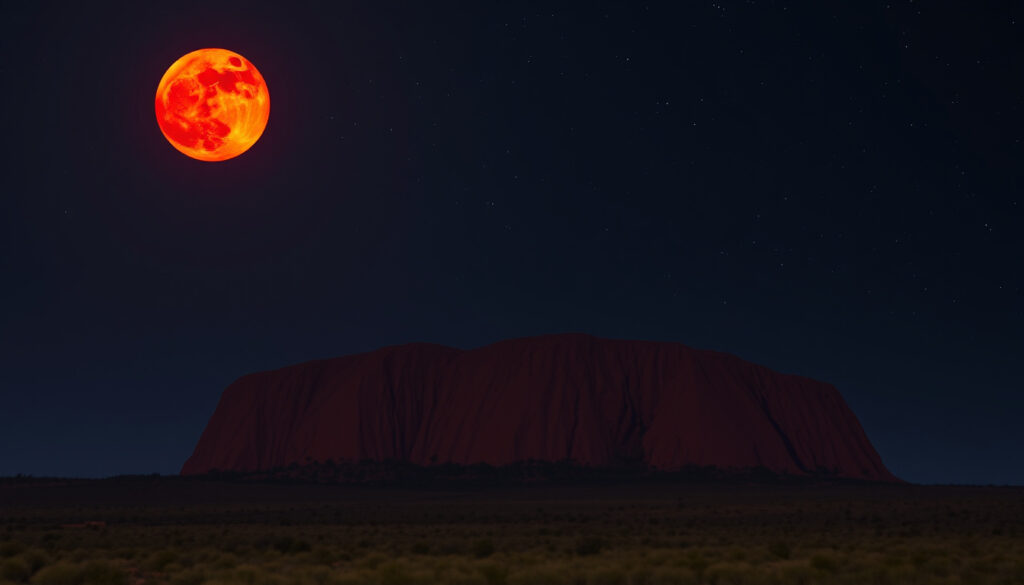
Blood Moon Australia: Times & Guide for 2025-2026 Eclipses
Australians are about to experience two total lunar eclipses within 18 months—March 2026 and March 2026—making this a rare window for skywatchers across the continent. The March 3, 2026 event stands out as the only total eclipse visible from Australia that year, and the next one won’t arrive until 2028.
Next Blood Moon: September 7-8, 2025 ·
March 2026 Event: Tuesday, March 3 ·
Totality Duration: 58 minutes ·
Visibility: Eastern Australia cities
Quick snapshot
- March 3, 2026 total eclipse visible across Australia (The Nightly)
- 58 minutes of totality during the March 3 eclipse (SBS News)
- Sydney totality: 10:04pm–11:02pm AEDT (The Nightly)
- Exact weather conditions on the night
- Western Australia partial visibility details
- September 7-8, 2025: Total lunar eclipse
- March 3, 2026: Total lunar eclipse (eastern Australia prime viewing)
- August 28, 2026: Penumbral lunar eclipse
- Mark March 3, 2026 on your calendar
- Find a viewing spot away from city lights
- The next total eclipse won’t come until 2028
The key facts table below aggregates confirmed timing data from verified astronomical sources for all seven Australian capital cities.
| Detail | Value |
|---|---|
| Event Name | Total Lunar Eclipse (Blood Moon) |
| Next Date | September 7-8, 2025 |
| March 2026 Date | Tuesday, March 3 |
| Duration | 3.5 hours total, 58 minutes totality |
| Best Cities | Sydney, Brisbane, Melbourne |
What time can I see the blood moon in Australia?
City-specific timing is everything for eclipse watchers. The March 3, 2026 event unfolds at different hours depending on where you live, though residents across the eastern seaboard get the most convenient evening slots.
Times for Sydney
Sydney viewers will see the total phase begin at 10:04pm AEDT on March 3, 2026, with totality lasting 58 minutes before ending at 11:02pm AEDT, according to The Nightly’s city-by-city breakdown. Moonrise occurs earlier that evening at 7:20pm AEDT, giving observers roughly three hours to watch the moon climb before the main event begins. Canberra shares the same timing, with totality running from 10:04pm to 11:02pm AEDT.
Times for Brisbane
Brisbane gets an earlier start time thanks to its position in the AEST timezone. The total eclipse begins at 9:04pm AEST and concludes at 11:02pm AEST, giving Queensland’s capital a generous 58-minute totality window. Moonrise happens at 6:08pm AEST, meaning the moon will already be climbing when the eclipse’s early partial phases begin.
Times for Perth and Adelaide
Western Australia watchers face a different situation. Perth’s total eclipse runs from 7:04pm to 8:02pm AWST on March 3, 2026—but here’s the catch: the moon is already partially eclipsed at moonrise in Perth, so you’ll catch the tail end of the partial phase before totality begins. Adelaide falls in the ACDT timezone, with totality from 9:34pm to 10:32pm ACDT and moonrise at 7:42pm.
What this means: if you’re in Sydney, Melbourne, Brisbane, or Canberra, the evening of March 3 offers prime viewing without staying up past midnight. Perth watchers get an earlier slot but with the trade-off of a partially eclipsed moon at rise.
How to see the ‘blood moon’ total lunar eclipse from Australia?
Unlike solar eclipses, lunar eclipses are perfectly safe to watch with the naked eye—no special glasses needed. The challenge is finding the right spot and knowing what to expect as the moon transforms.
Best viewing spots
For optimal viewing of the blood moon, observers should head to a location with low artificial light and clear skies, as recommended by The Nightly’s viewing guide. This means heading away from city centres if possible—a beach, hillside, or open park with an unobstructed eastern horizon works well. The key is having a clear sightline to where the moon will rise.
If low-light locations aren’t available to you, a balcony or high-rise building can still allow viewing of the blood moon, according to eclipse watchers. The higher you are, the less obstruction you’ll face.
Tips for clear skies
Cloud cover is the wildcard no one can control. Check your local weather forecast the afternoon of March 3 and have a backup plan—a location with different sightlines—if clouds threaten your primary spot. Even partial cloud cover often leaves enough gaps to catch the main event.
Equipment needed
Here’s the good news: no special equipment is required for a lunar eclipse. Binoculars or a small telescope will enhance the view, letting you see details of the moon’s surface as it darkens, but the naked eye is sufficient to experience the full blood moon effect. A comfortable chair and warm clothing (eclipse nights get cold even in Australian autumn) are the real essentials.
A dark sky and clear eastern horizon matter more than any gear. For city dwellers who can’t escape light pollution, even a rooftop balcony will do—the blood moon’s red glow is unmistakable to the naked eye.
Is the lunar eclipse visible in Australia on September 7?
Yes—September 7-8, 2025 brings a total lunar eclipse visible across Australia, though the timing differs from the March 2026 event. This earlier eclipse is sometimes called the Corn Moon eclipse, named after the September harvest moon tradition.
September 7-8 2025 details
The March 2026 total lunar eclipse will be visible across the Americas, Pacific region, Australia, New Zealand, and parts of East Asia, according to Vaonis’s eclipse visibility guide. It will not be visible from Europe and Africa, according to Sky at Night Magazine’s eclipse coverage. The event falls during Australia’s spring season, making for potentially clearer skies than the autumn March eclipse.
Visibility across Australia
All Australian cities should be able to observe the September 2025 eclipse to some degree, though exact timings will vary by timezone. This makes it an accessible national event—unlike the March 2026 eclipse, where western cities face trickier partial-phase timing.
The pattern here is straightforward: September 2025 serves as a warm-up event for the main show in March 2026. If you’ve never watched a total lunar eclipse, September offers a gentler introduction with nationwide visibility.
What time is the blood moon on March 3rd, 2026 in Australia?
March 3, 2026 is the date astronomy enthusiasts should have circled. The total lunar eclipse that evening marks the only total lunar eclipse visible from Australia in 2026, according to SBS News. More significantly, the next total lunar eclipse anywhere on Earth after March 3, 2026 will not occur until 2028, making this a genuinely rare event.
Event timeline
The entire total phase of the March 3, 2026 eclipse is fully visible from all of Australia and New Zealand, according to Vaonis’s eclipse timing data. Observers in the western part of the world will see the eclipse between midnight on March 2 and dawn on March 3, while observers in the eastern part of the world—including Australia—will see it in the evening of March 3.
The whole process takes roughly 3.5 hours from start to finish, with the blood moon itself—the period of totality—lasting 58 minutes, according to ABC Science’s eclipse explainer. That’s just under an hour of that distinctive copper-red colouring that gives the phenomenon its name.
City-specific timings
Here’s the complete Australian city breakdown for March 3, 2026:
- Sydney: Moonrise 7:20pm AEDT; totality 10:04pm–11:02pm AEDT
- Melbourne: Moonrise 7:49pm AEDT; totality 10:04pm–11:02pm AEDT
- Brisbane: Moonrise 6:08pm AEST; totality 9:04pm–11:02pm AEST
- Adelaide: Moonrise 7:42pm ACDT; totality 9:34pm–10:32pm ACDT
- Perth: Moon partially eclipsed at moonrise; totality 7:04pm–8:02pm AWST
- Darwin: Moonrise 7:00pm ACST; totality 9:03pm–11:53pm ACST
- Canberra: Same timing as Sydney—totality 10:04pm–11:02pm AEDT
The implication: Darwin gets the longest totality of any Australian capital at nearly three hours, though that’s because the total phase begins earlier there. For most viewers in Sydney, Melbourne, Brisbane, and Canberra, the 58-minute window between 9pm and 11pm local time is the target.
When is the next blood moon in Australia?
Beyond the immediate events in 2025 and 2026, Australians face a longer wait than most of the world. The March 3, 2026 eclipse will not be visible from Europe and Africa, but the Americas and Pacific region—including Australia, New Zealand, and East Asia—will get the full show, according to Sky at Night Magazine’s global visibility map. The next total lunar eclipse anywhere on Earth after March 3, 2026 will not occur until 2028, according to SBS News.
Upcoming dates
Two blood moon events are coming for Australian skygazers:
- September 7-8, 2025: Total lunar eclipse with nationwide visibility
- March 3, 2026: Total lunar eclipse—the only one visible from Australia that year
- August 28, 2026: Penumbral lunar eclipse (less dramatic; moon only passes through Earth’s outer shadow)
Past events
Australia saw total lunar eclipses in 2022 and 2023, but neither offered the convenient evening timing of the March 2026 event. The 2025-2026 pairing is particularly significant because it bookends nearly 18 months of prime eclipse viewing.
Australians get two eclipses in 18 months, but then face a two-year gap. By contrast, much of the Americas will see total eclipses in 2027. Timing luck matters in eclipse chasing.
How to watch: step-by-step
Here’s how to make the most of the March 3, 2026 eclipse:
- Check the forecast: On the afternoon of March 3, look up your local cloud cover prediction. If heavy clouds are expected, consider a backup location.
- Find your spot: Head somewhere with low artificial light and a clear eastern horizon. A beach, hillside, or park away from city centres is ideal. If you’re urban-bound, a high balcony works.
- Get there early: Moonrise in your city happens before totality. Arrive at your viewing spot roughly 30 minutes before the total phase begins so you can watch the moon climb and the partial phases progress.
- Watch the transformation: As Earth moves between the Moon and Sun, you’ll see the moon darken from the bottom up as totality approaches. When it arrives, look for the reddish-orange glow—the blood moon effect.
- Stay warm: Australian autumn nights get cold, even in Queensland. Bring a jacket and, if sitting for extended periods, something to sit on.
Lunar eclipses are forgiving events. Unlike solar eclipses, there’s no rush to see the “main moment”—the transformation takes about an hour. You can step outside for a few minutes or stay for the entire show.
The science behind the blood moon
The blood moon phenomenon occurs because blue wavelengths scatter out while longer red wavelengths bend into Earth’s shadow and illuminate the lunar surface, according to SBS News. During a lunar eclipse, Earth passes between the Moon and the Sun, causing Earth’s shadow to be cast on the lunar surface, according to Sky at Night Magazine. The term “blood moon” comes from the reddish tint the moon takes on during totality.
Think of it as nature’s version of a red sunrise or sunset. Just as the sky turns orange and red at dawn and dusk when sunlight passes through a long atmospheric path, the moon glows copper-red during totality when sunlight filters through Earth’s atmosphere and wraps around our planet’s curved surface to illuminate the moon.
The exact shade of red varies from eclipse to eclipse, depending on atmospheric conditions. Dust, pollution, or recent volcanic activity can make the moon appear darker, almost chocolate-brown. Clear skies tend to produce a brighter, more vivid orange-red. March 2026 will be worth watching just to see what shade it turns.
What we know and what remains unclear
Here’s the balance between confirmed information and unknowns heading into the 2025-2026 eclipse season:
Confirmed facts
- March 3, 2026 timings for Sydney, Melbourne, Brisbane, Perth, Adelaide, Canberra, and Darwin
- 58-minute totality duration
- September 7-8, 2025 total lunar eclipse date
- Next total eclipse after March 2026 won’t occur until 2028
- Lunar eclipses are safe to watch with naked eye
- Entire totality phase visible from all of Australia and New Zealand
What’s still unclear
- Exact weather conditions on March 3, 2026
- Western Australia partial visibility details
- How dark or vivid the blood moon colour will be
- Specific viewing turnout numbers
The pattern emerging: Australia’s eclipse calendar is backloaded—both events are front-loaded in the 18-month window, leaving viewers to plan accordingly or wait until 2028.
What people are saying
The March 3, 2026 total lunar eclipse is the only total lunar eclipse visible from Australia in 2026—and stargazers won’t see another one until 2028.
— SBS News
The whole process takes about 3.5 hours, with the blood moon itself—the period of totality—lasting just under an hour.
— ABC Science, via SBS News coverage
Observers in the eastern part of the world will see the March 3, 2026 lunar eclipse in the evening of March 3.
— Sky at Night Magazine’s timing guide
For Australians, the choice is clear: catch both the March 2026 and March 2026 eclipses while they’re available, or wait until 2028 when the next total lunar eclipse comes around—and hope the weather cooperates.
Related reading: Australia heatwave forecast · Bomb cyclone NSW
Australian skywatchers eyeing the March 3, 2026 eclipse can consult this UK viewing guide for comparative timings in early morning UK skies.
Frequently asked questions
Is September 7 a blood moon?
Yes, September 7-8, 2025 brings a total lunar eclipse sometimes called the Corn Moon, which will appear as a blood moon with a reddish tint during totality.
Who can see the blood moon on March 3, 2026?
The March 3, 2026 total lunar eclipse will be visible across much of the Americas, the Pacific region, Australia, New Zealand, and parts of East Asia. It will not be visible from Europe and Africa.
How long is the lunar eclipse on September 7?
The entire September 7-8, 2025 lunar eclipse event will span several hours, with the period of totality lasting roughly an hour. Exact timings vary by location.
Will the blood moon be seen in Australia?
Yes, both the March 2026 and March 2026 total lunar eclipses are visible from Australia. The March 2026 event is the only total eclipse visible from Australia in 2026.
Where to see the blood moon rise in Australia?
For the best view, head to a location with low artificial light and a clear eastern horizon—a beach, hillside, or open park away from city centres. A high balcony or rooftop works if you’re in an urban area.
What time will I see the blood moon in Australia?
On March 3, 2026, totality begins at 9:04pm AEST in Brisbane, 10:04pm AEDT in Sydney and Melbourne, 9:34pm ACDT in Adelaide, and 7:04pm AWST in Perth.
When can Australians get the best view of the eerie blood moon?
The March 3, 2026 eclipse offers the best combination of convenient evening timing and 58 minutes of totality. Being away from city lights helps, but even urban viewers with a clear eastern sky can catch the red glow.
More related posts
 Tom Segura: Biography, Weight Loss, Net Worth, and Name Meaning
 Windsor Smith Boots: Ladies, Platform, Men’s, Leather Guide
 Sam Ibrahim: Biography, Business, Philanthropy and Media
 Harmanpreet Kaur: Biography, Age, Marriage, Retirement & More
 Staple the Label: Clothing, Dresses, Pants, Tops & Sales Guide
 Cory Bernardi: Biography, Resignation, and Speech Controversy
 Peggy Lipton: Relationships, Ethnicity, and Cause of Death
 LaMelo Ball: Height, Baby, Surgery, Net Worth & More